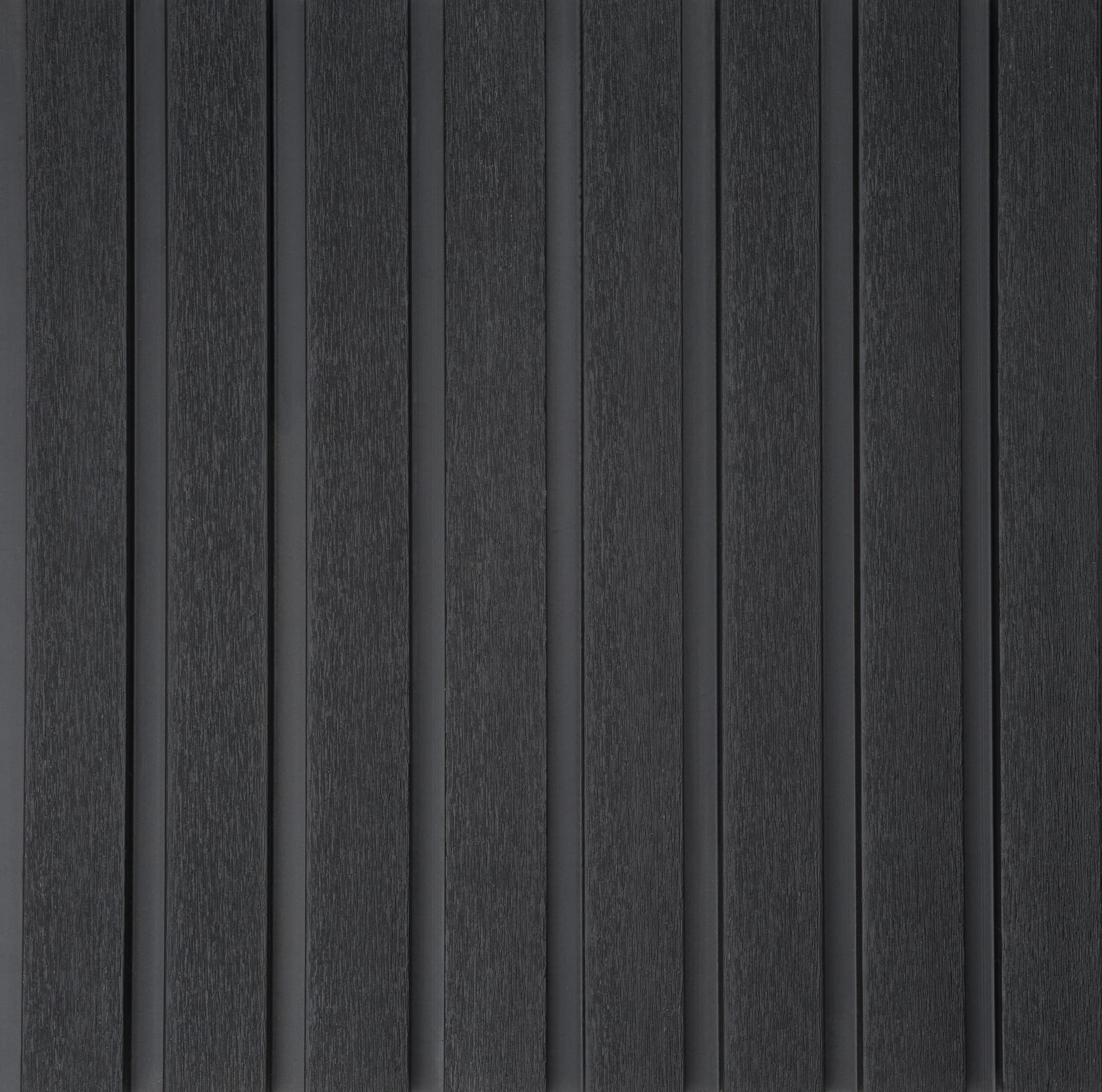
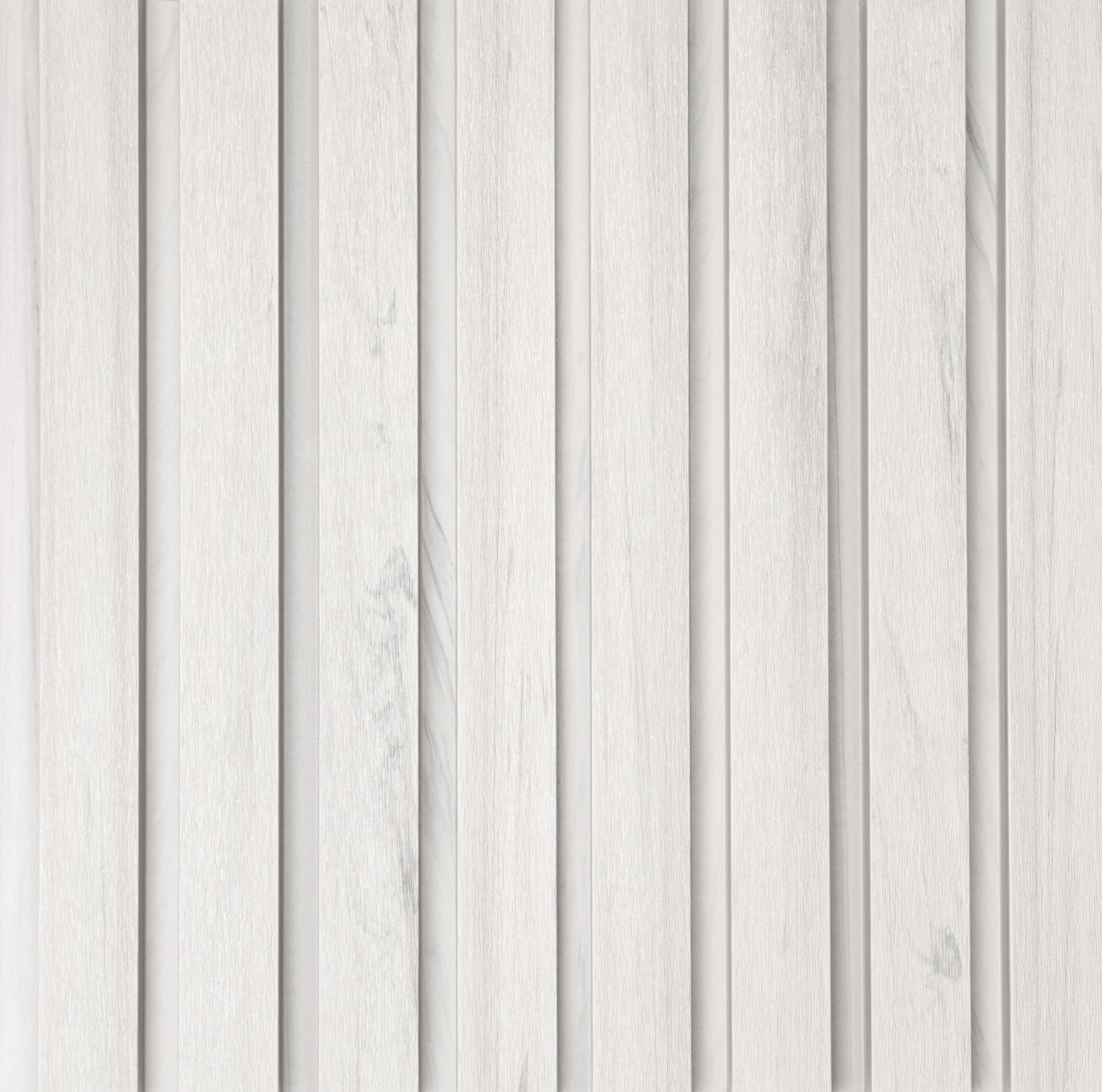
2nd Generation WPC

Grooved Panel
for Facades(Co-extruded WPC Cladding)

A 9.8 ft (300 cm) grooved composite panel for exterior facades, walls and ceilings, capped on all 4 sides with Max Shield. It stands up to sun, rain and moisture and never needs stain or yearly upkeep.

Or see the specifications
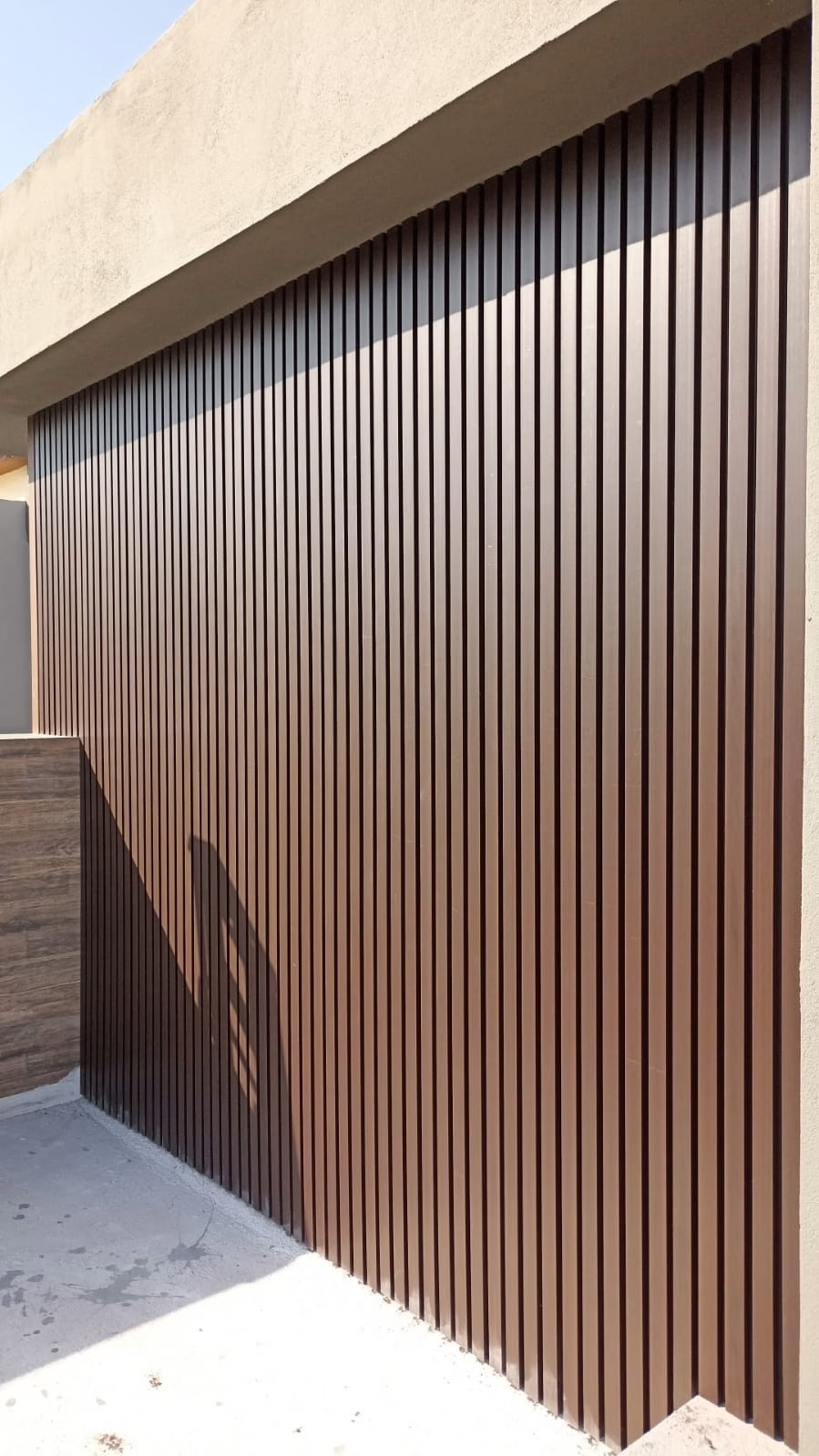
Tall wall clad in vertical wood-tone WPC grooved panels
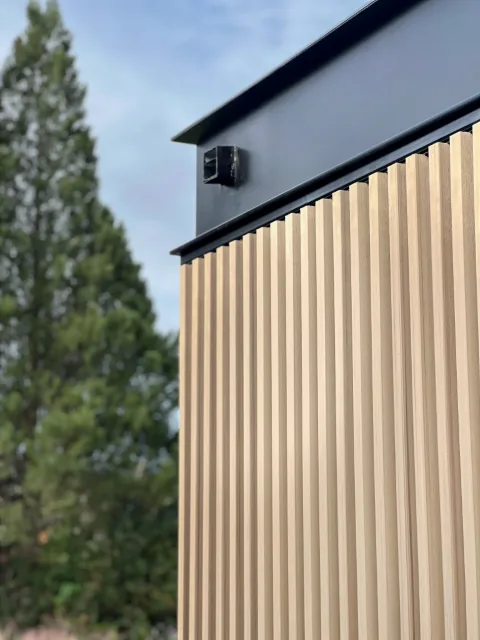
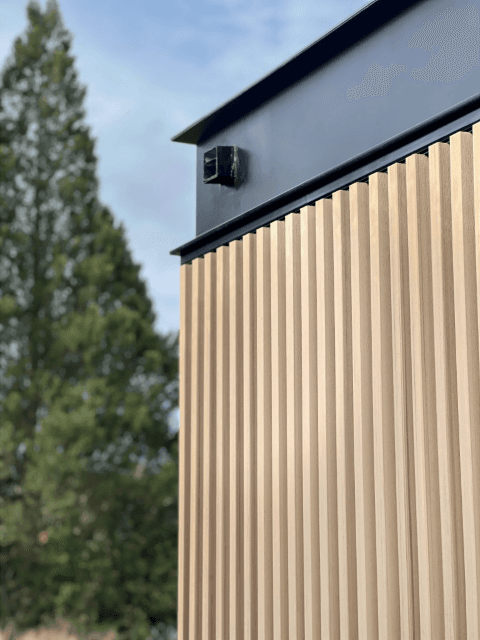
Light-tone vertical WPC grooved panels on a facade corner, with pine trees behind
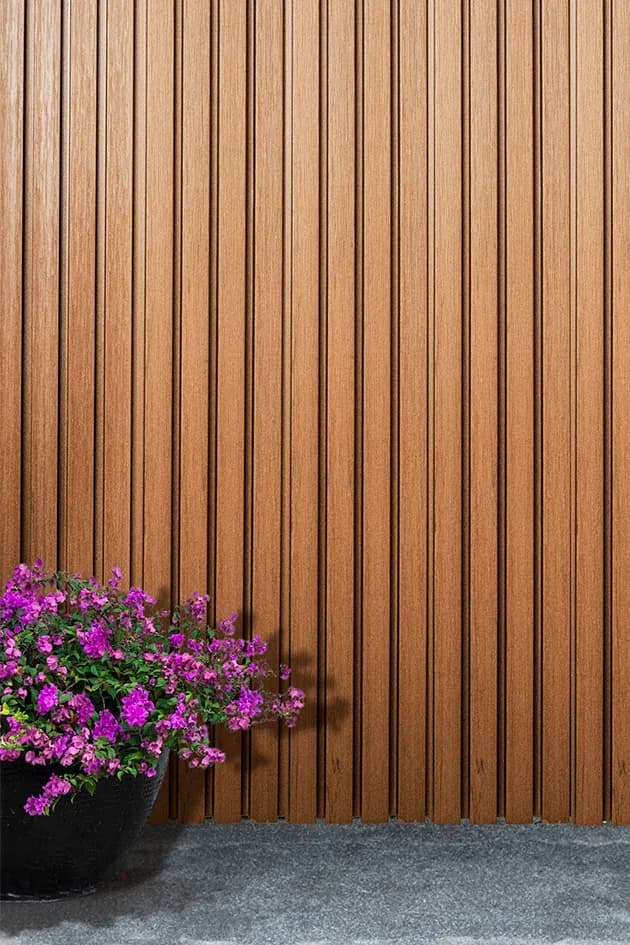
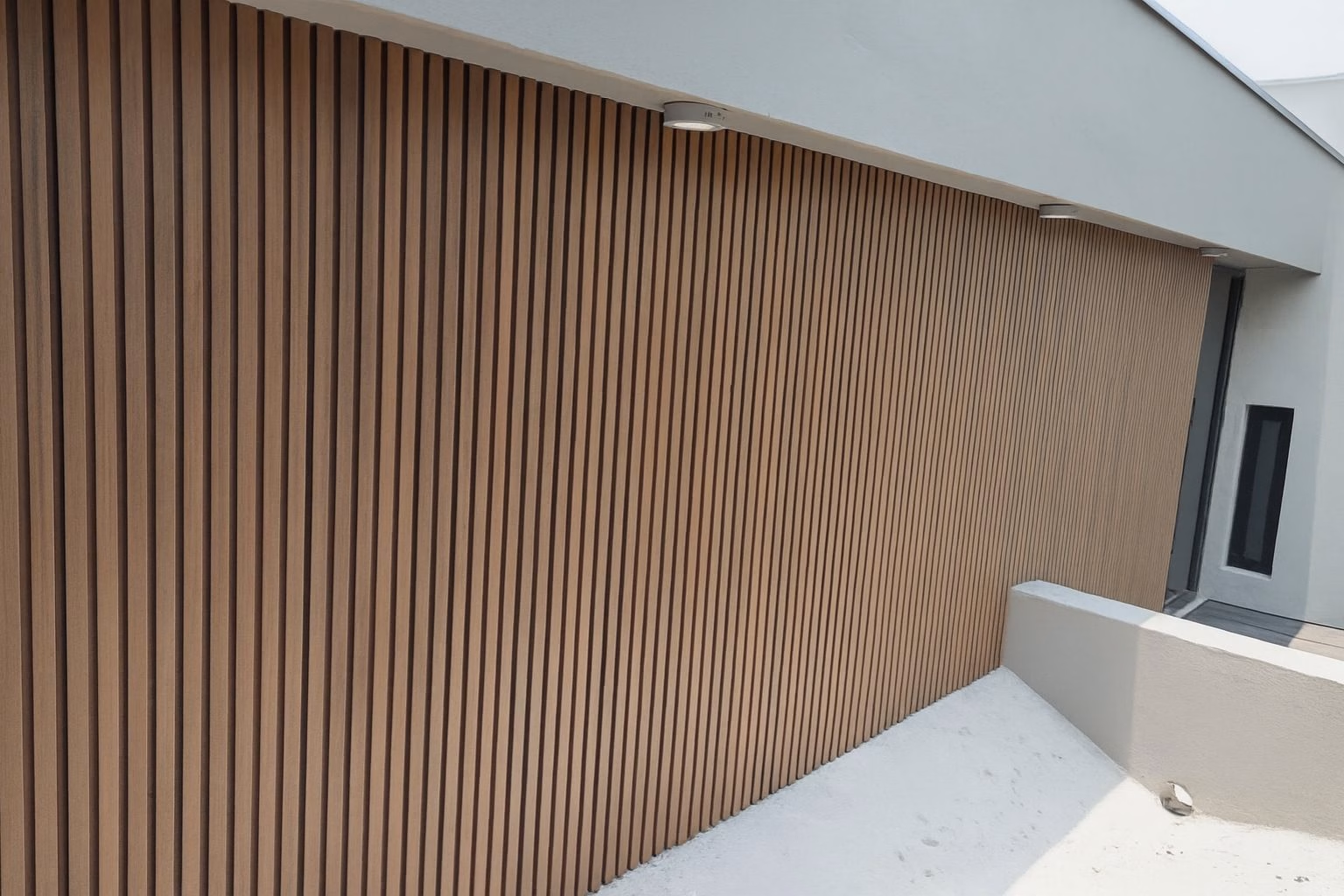
Vertical wood-tone WPC grooved panel wall next to a plant with purple flowers
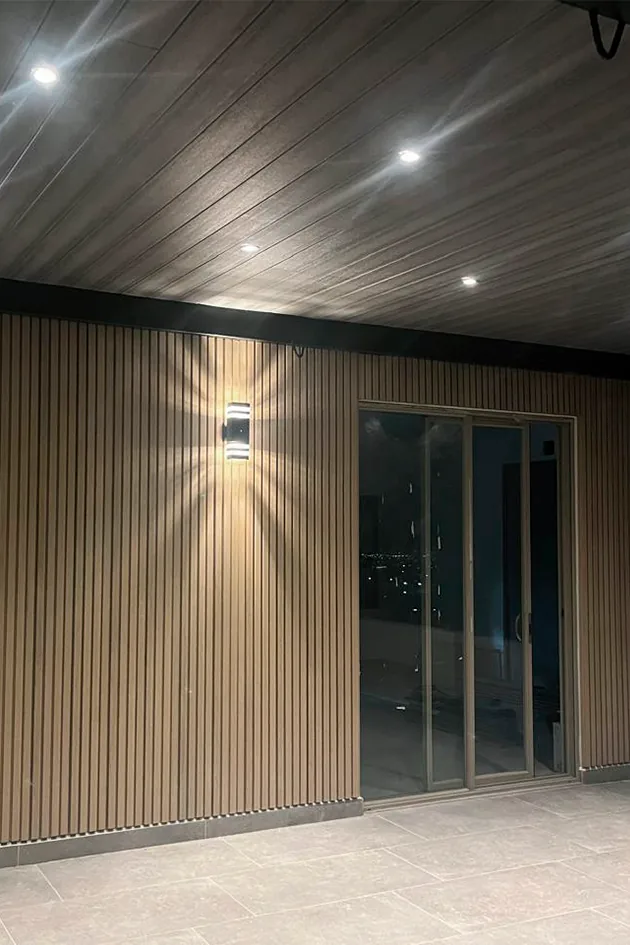
Covered patio at night with a WPC grooved panel wall, a wall light on and a glass door
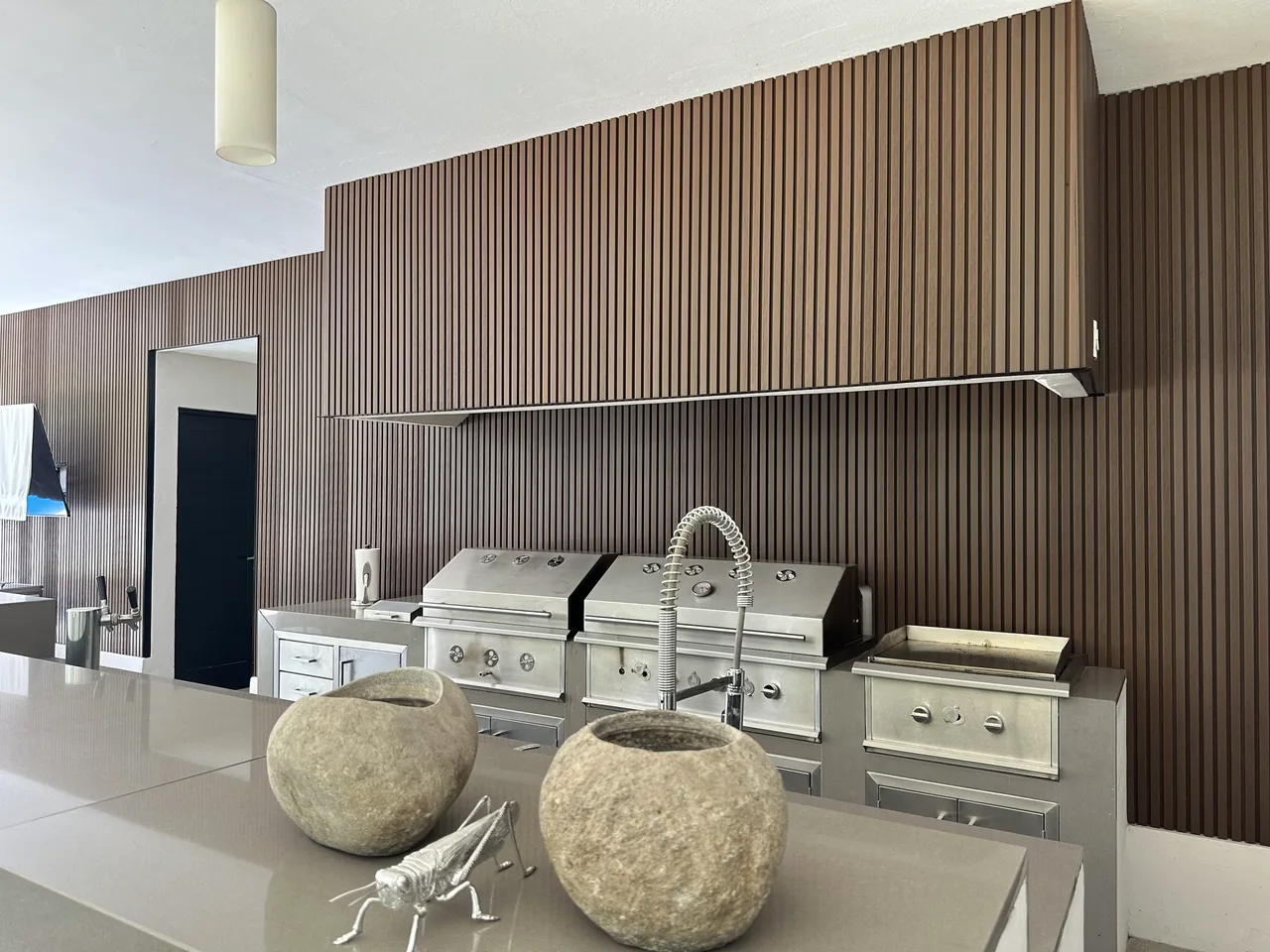
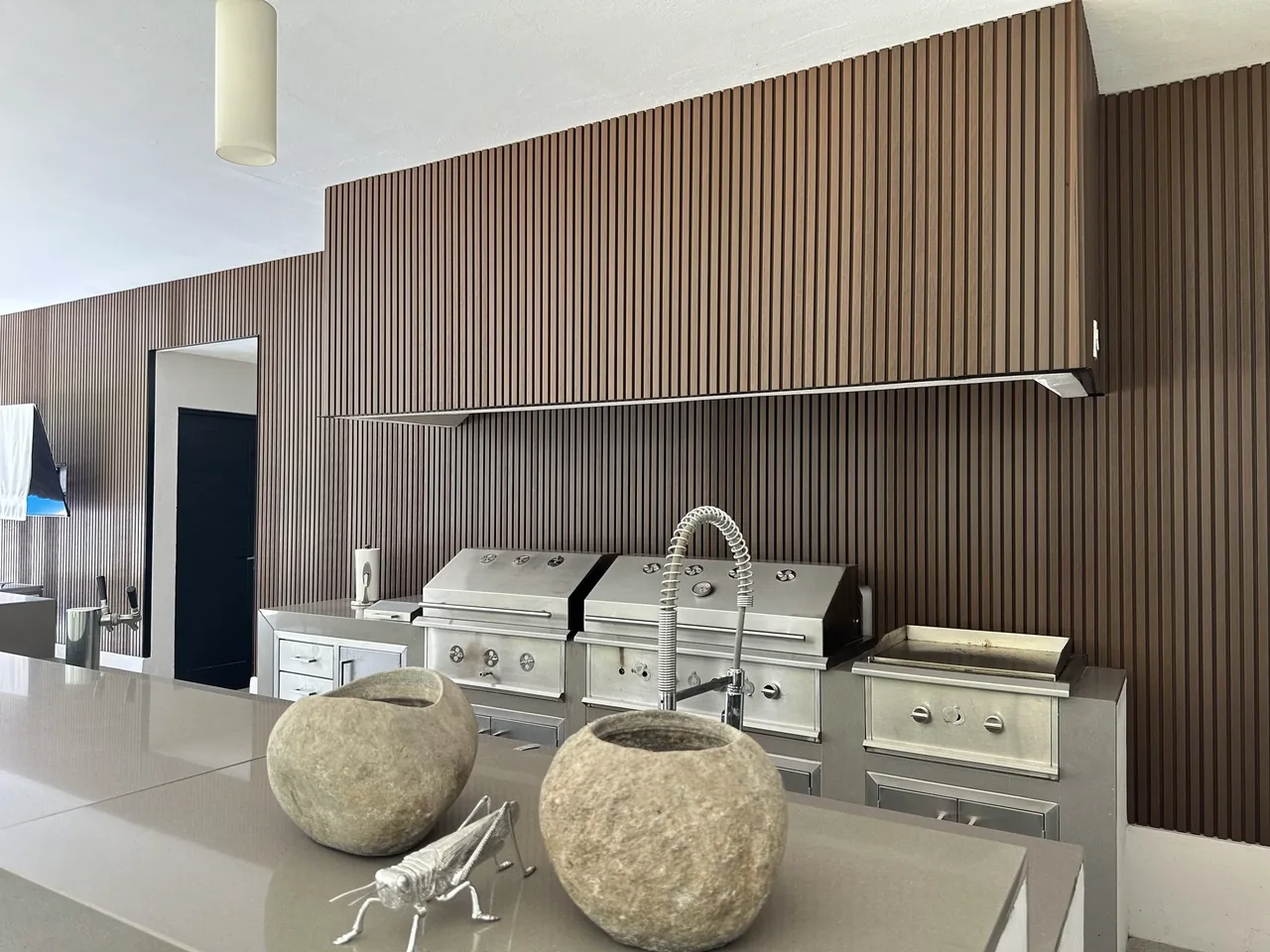
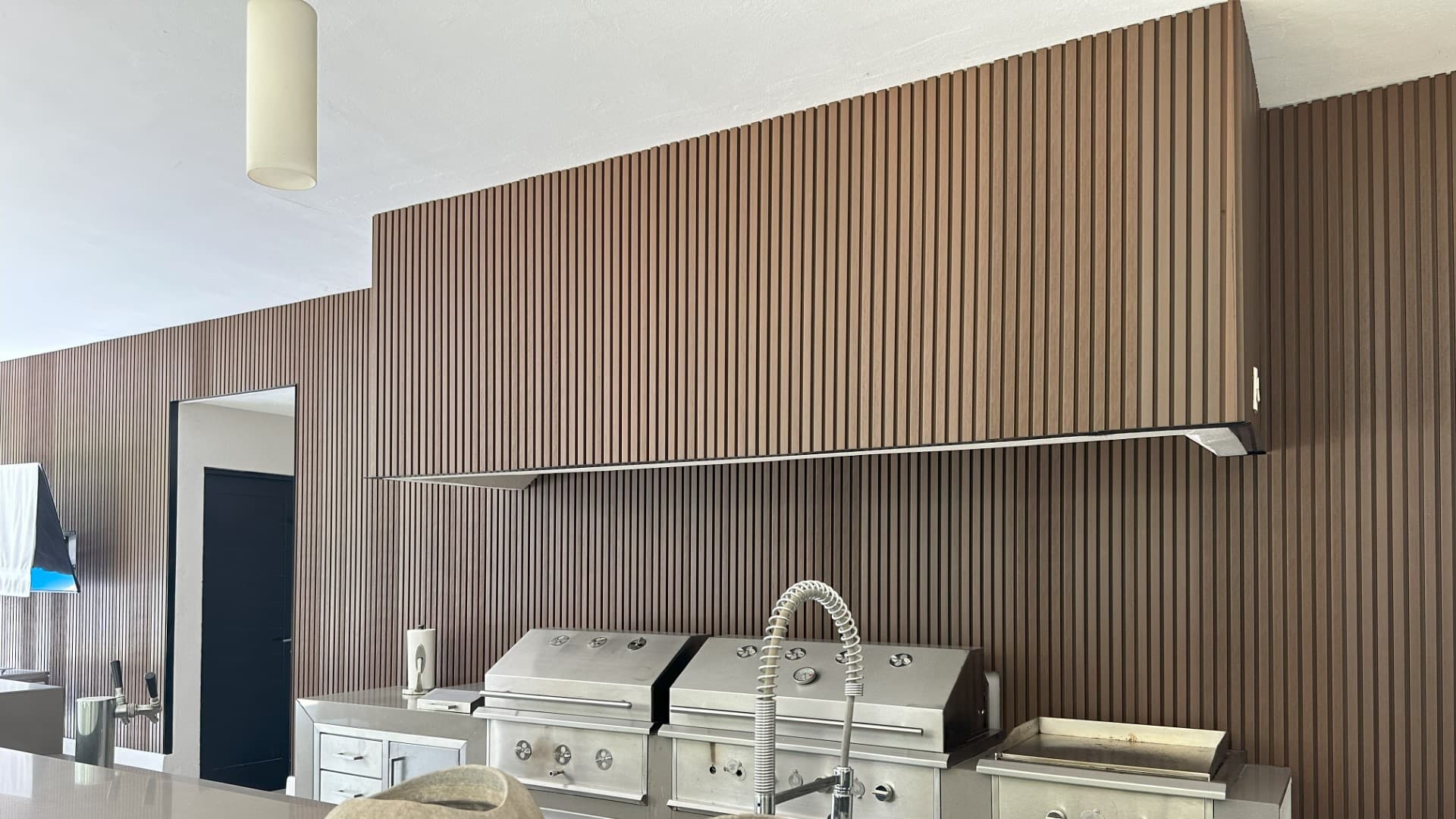
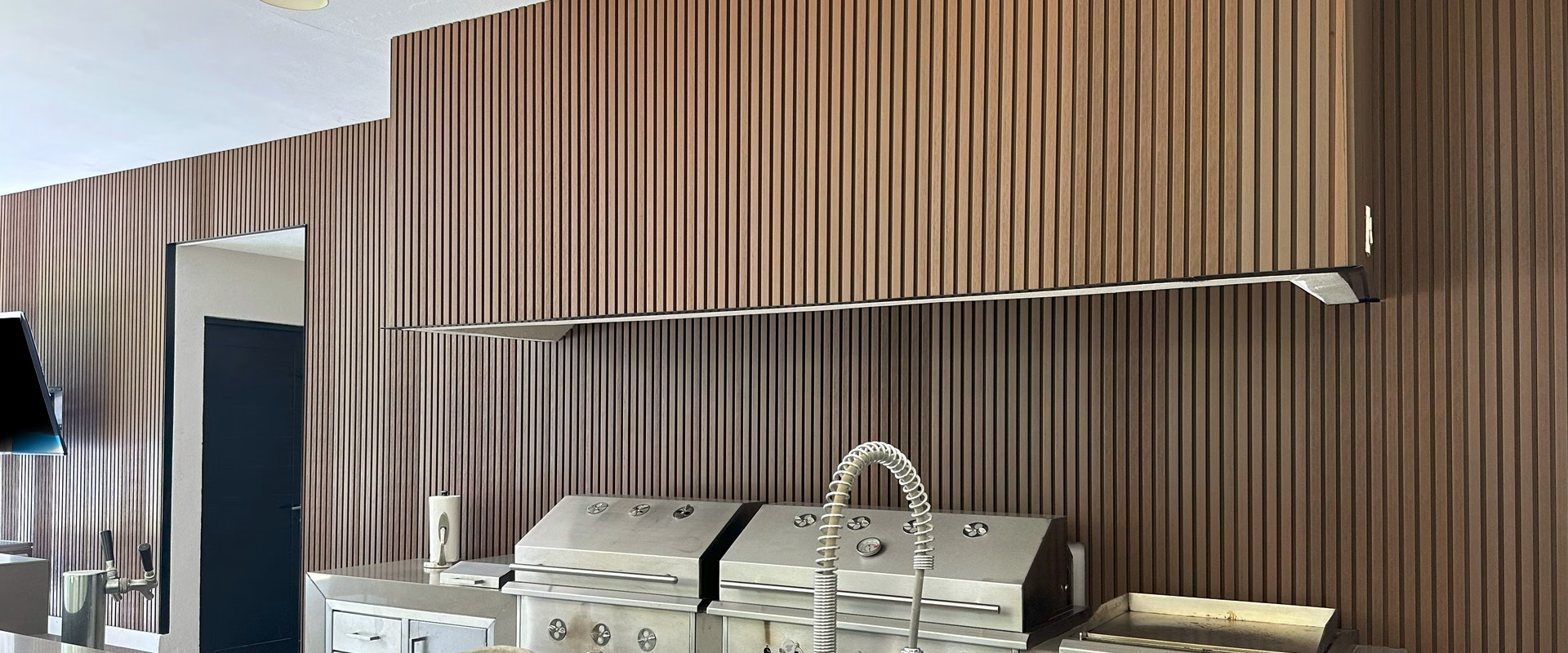
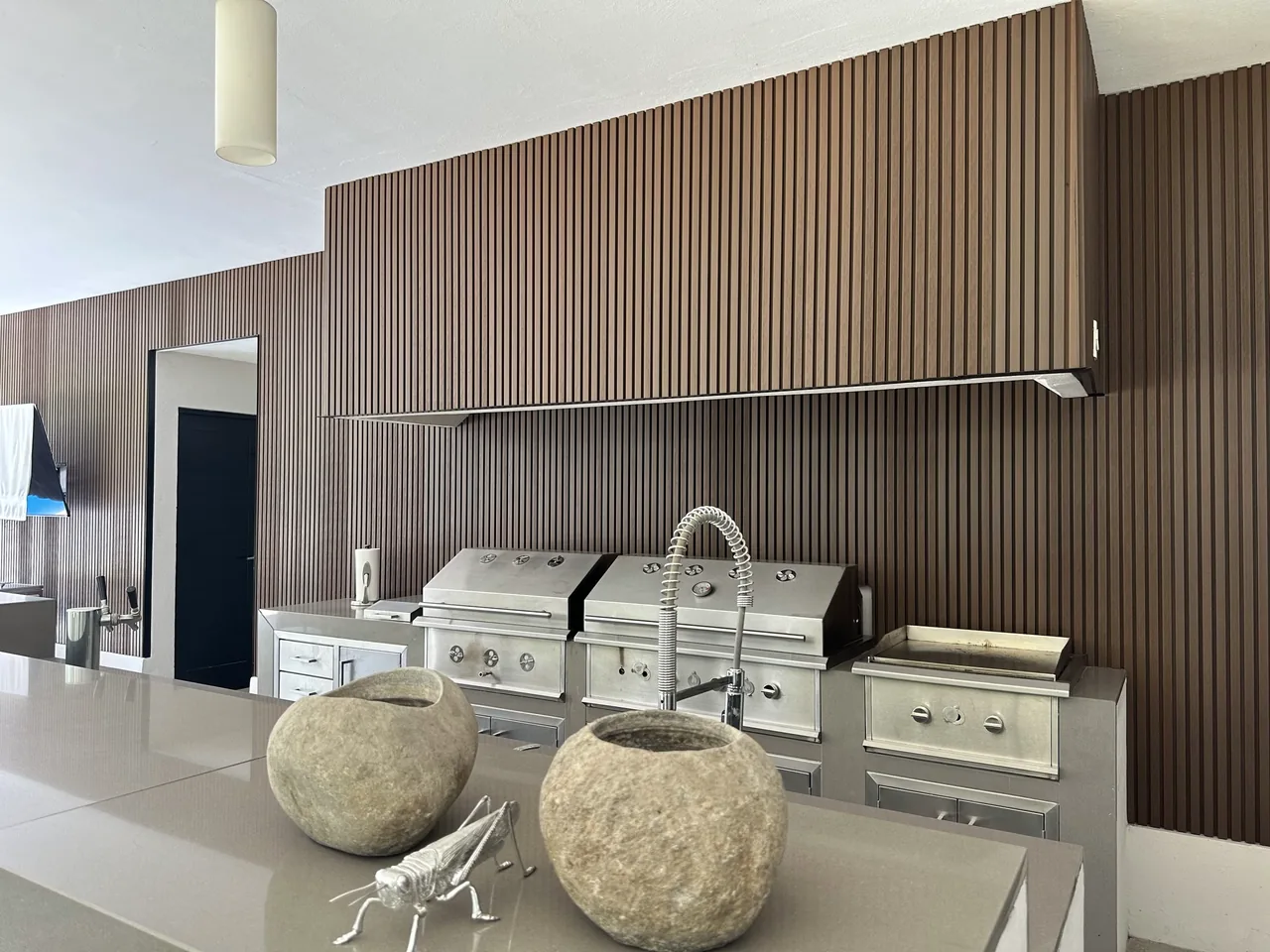
Outdoor kitchen with stainless steel grills in front of a wood-tone WPC grooved panel wall
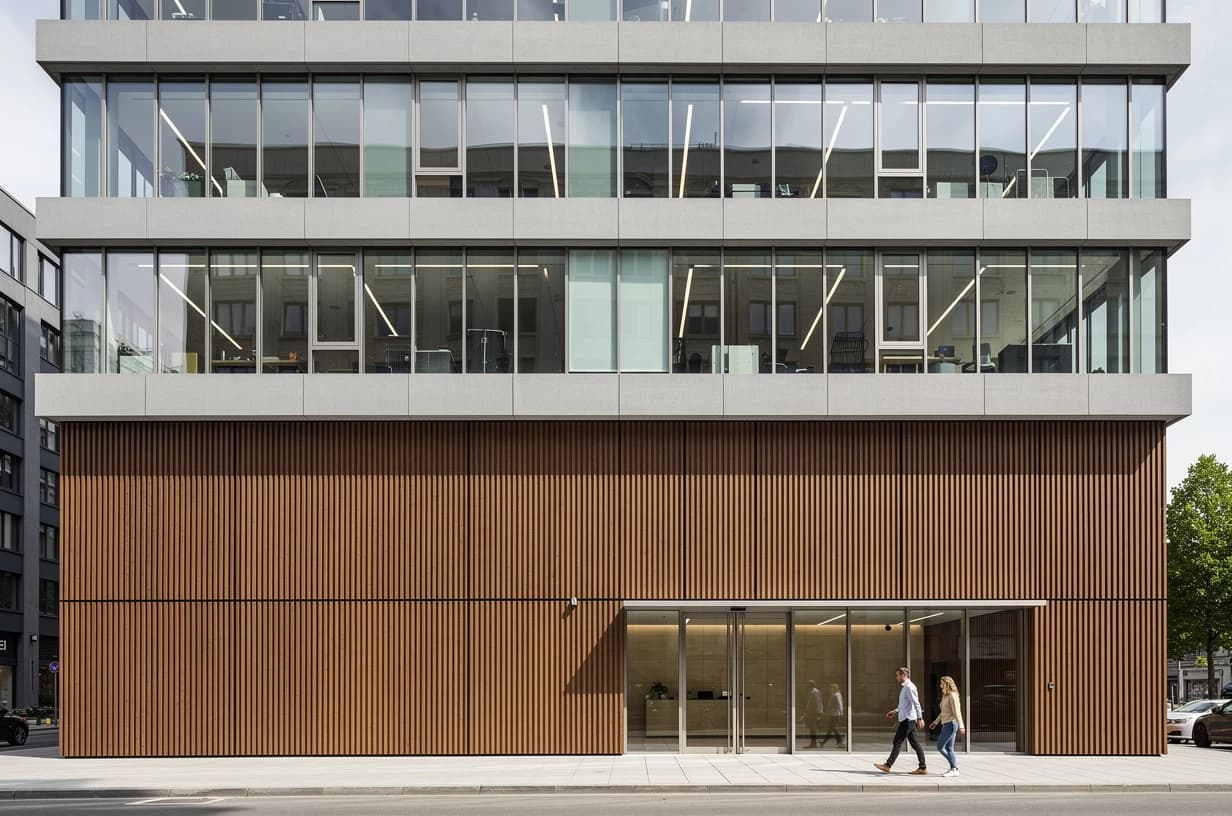
Ground floor of an office building clad in vertical wood-tone WPC grooved panels, with a glass entrance
Close-up of a WPC grooved panel wall in an outdoor kitchen
Vertical wood-tone WPC grooved panel wall with a ceiling light
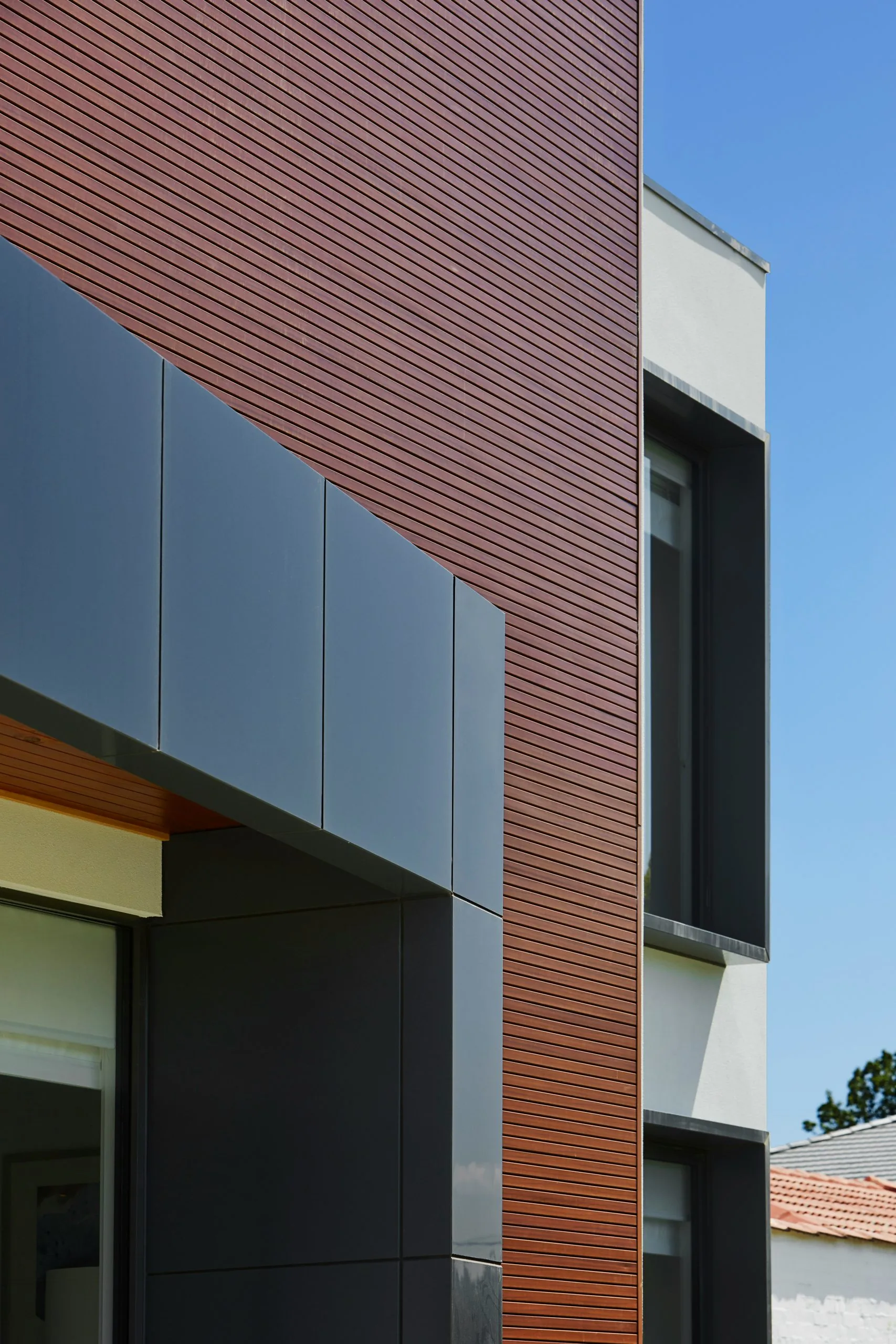
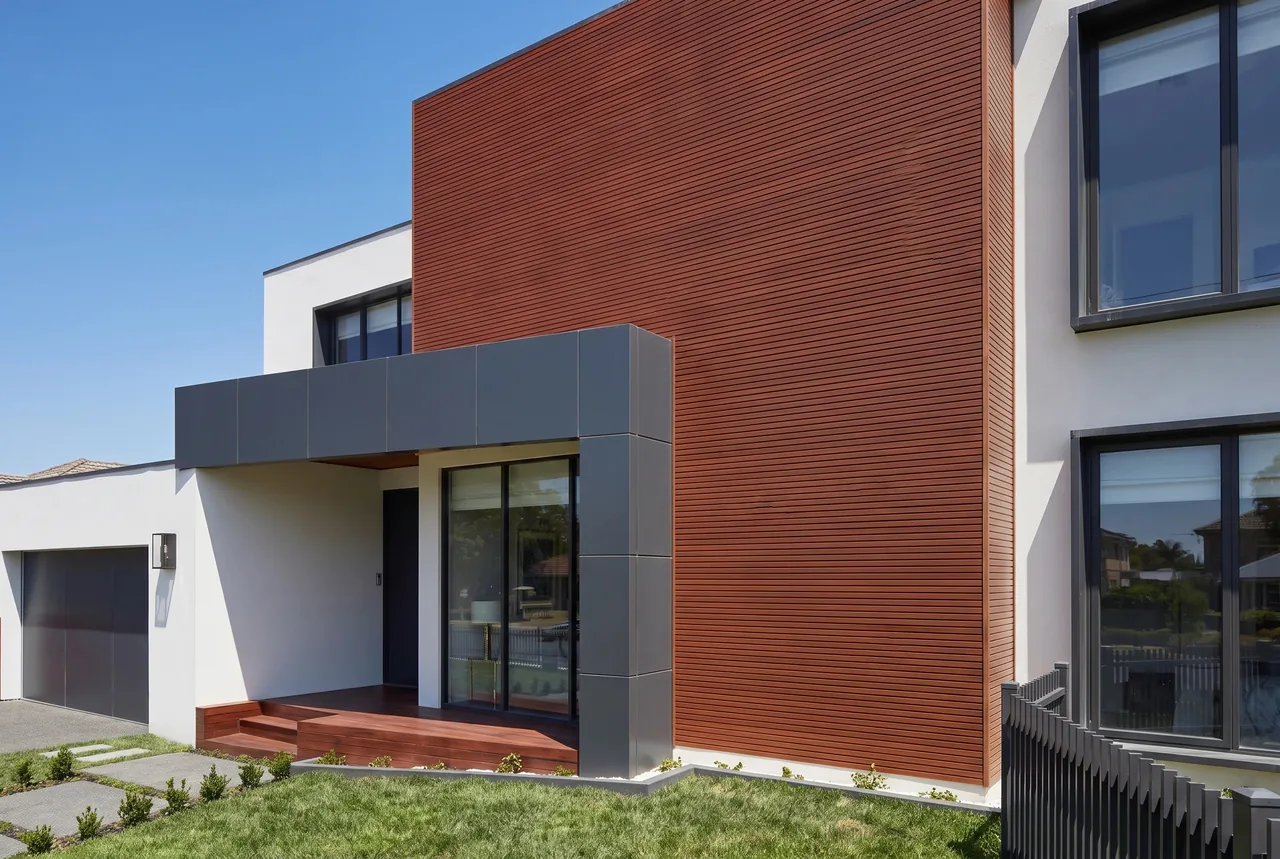
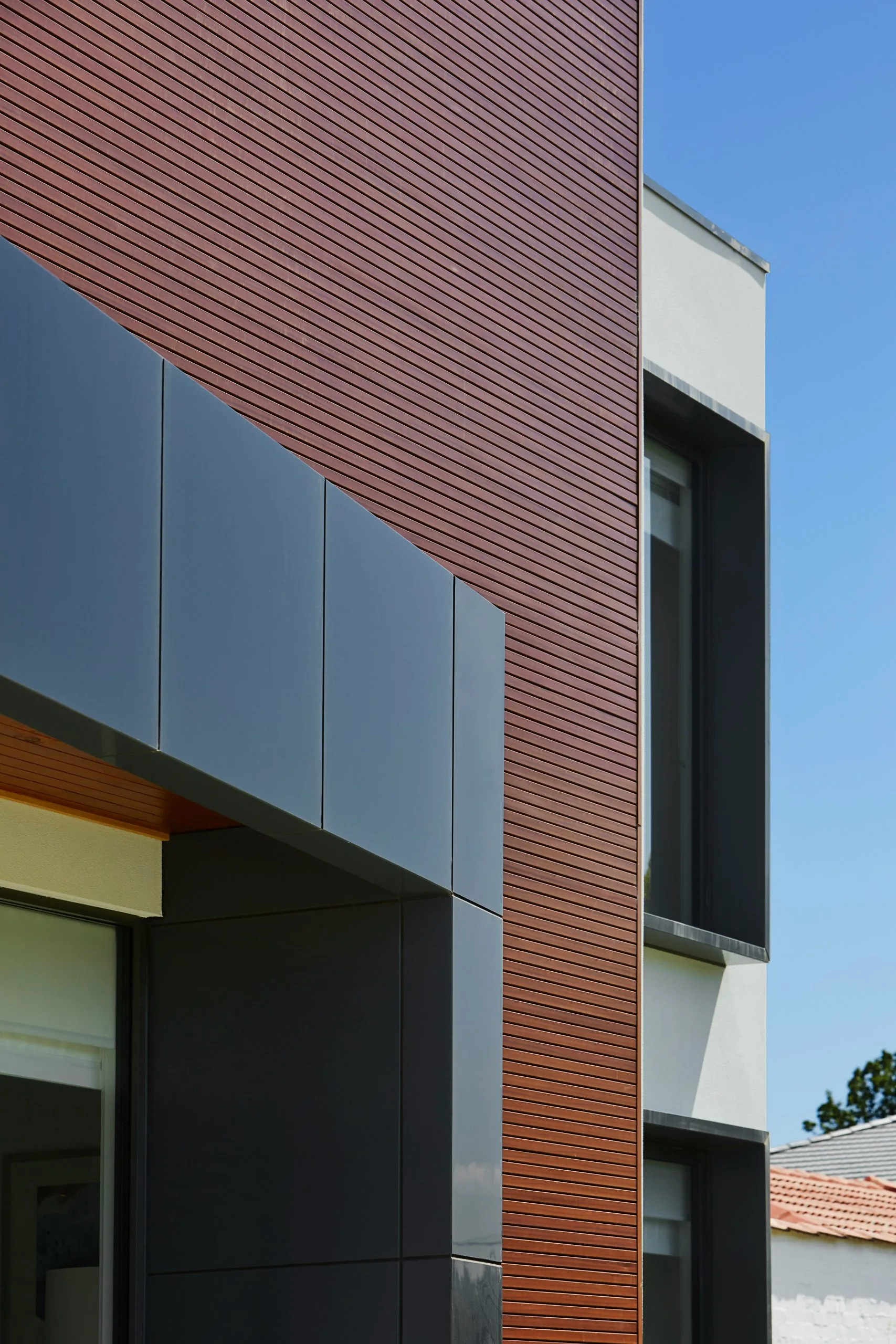
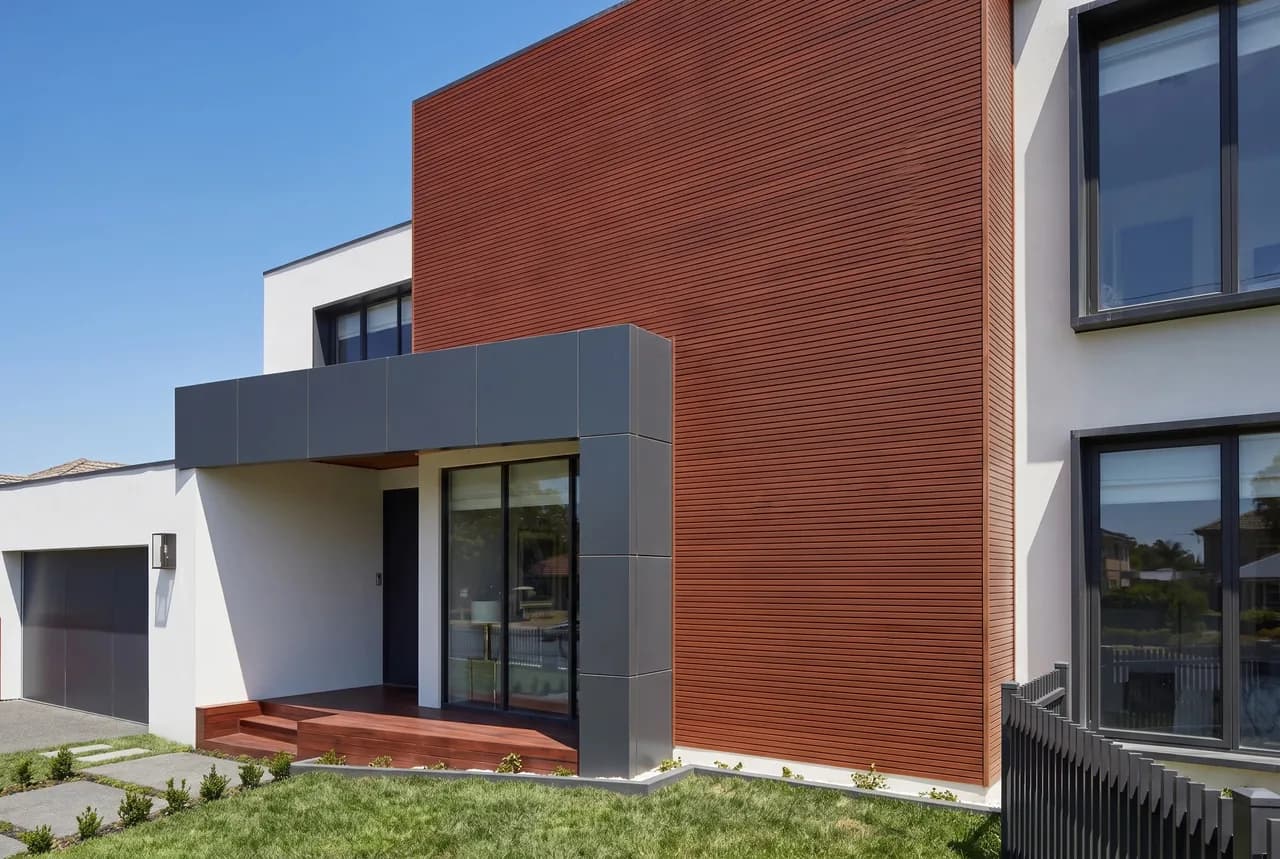
Facade detail with horizontal reddish WPC grooved panel next to gray panels
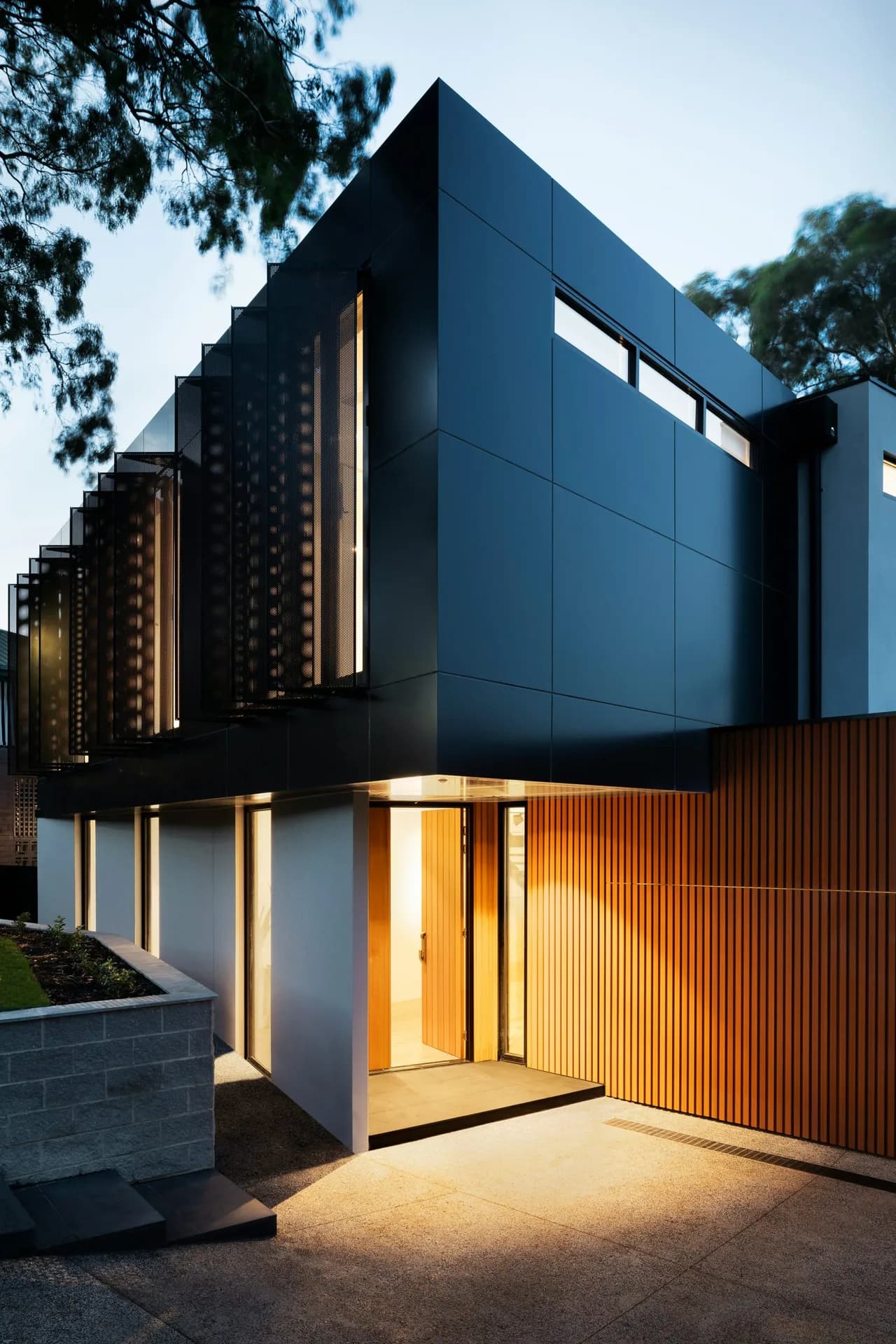
Modern facade at dusk with a lit wood-tone WPC grooved panel wall next to the entrance
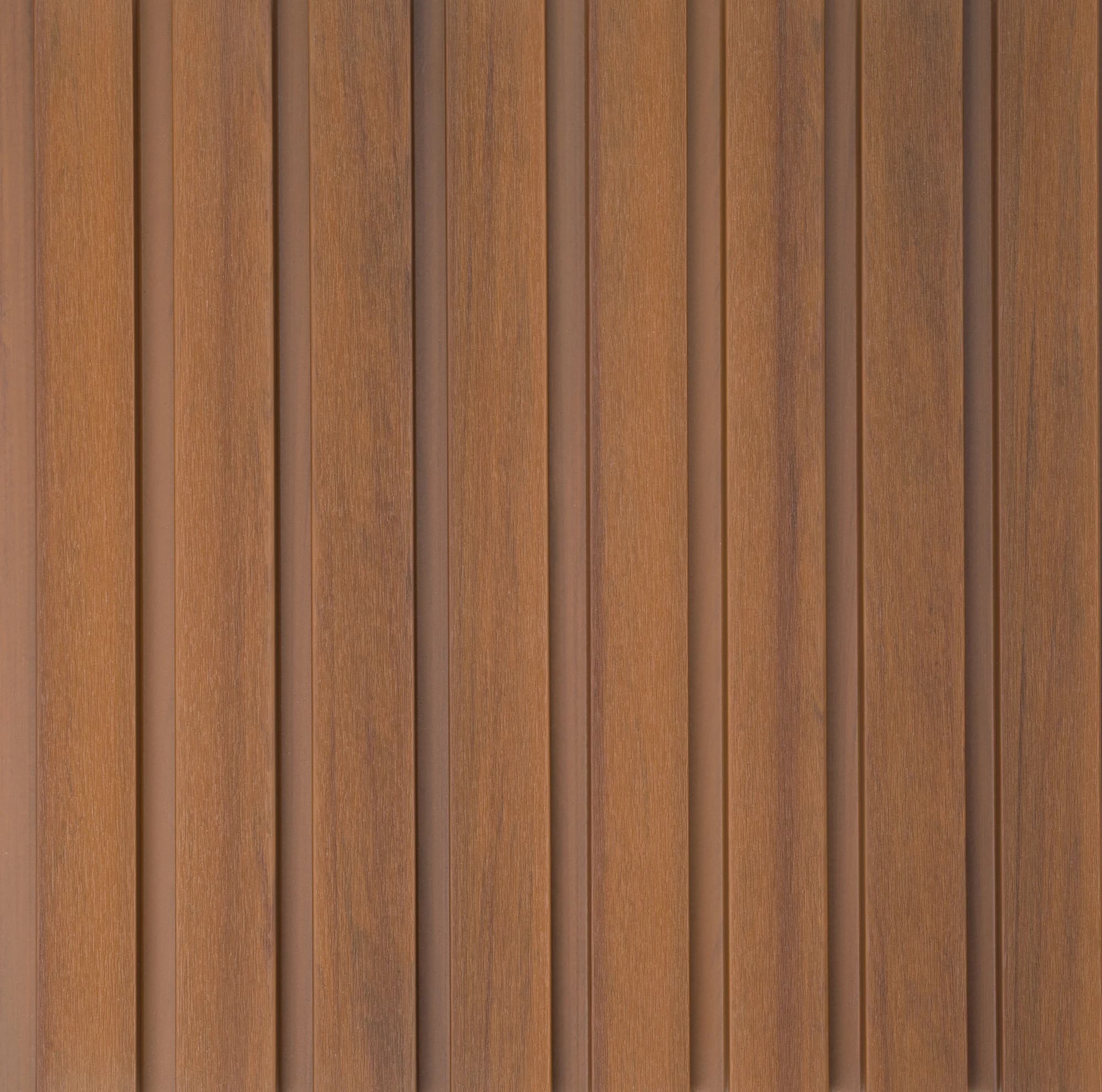
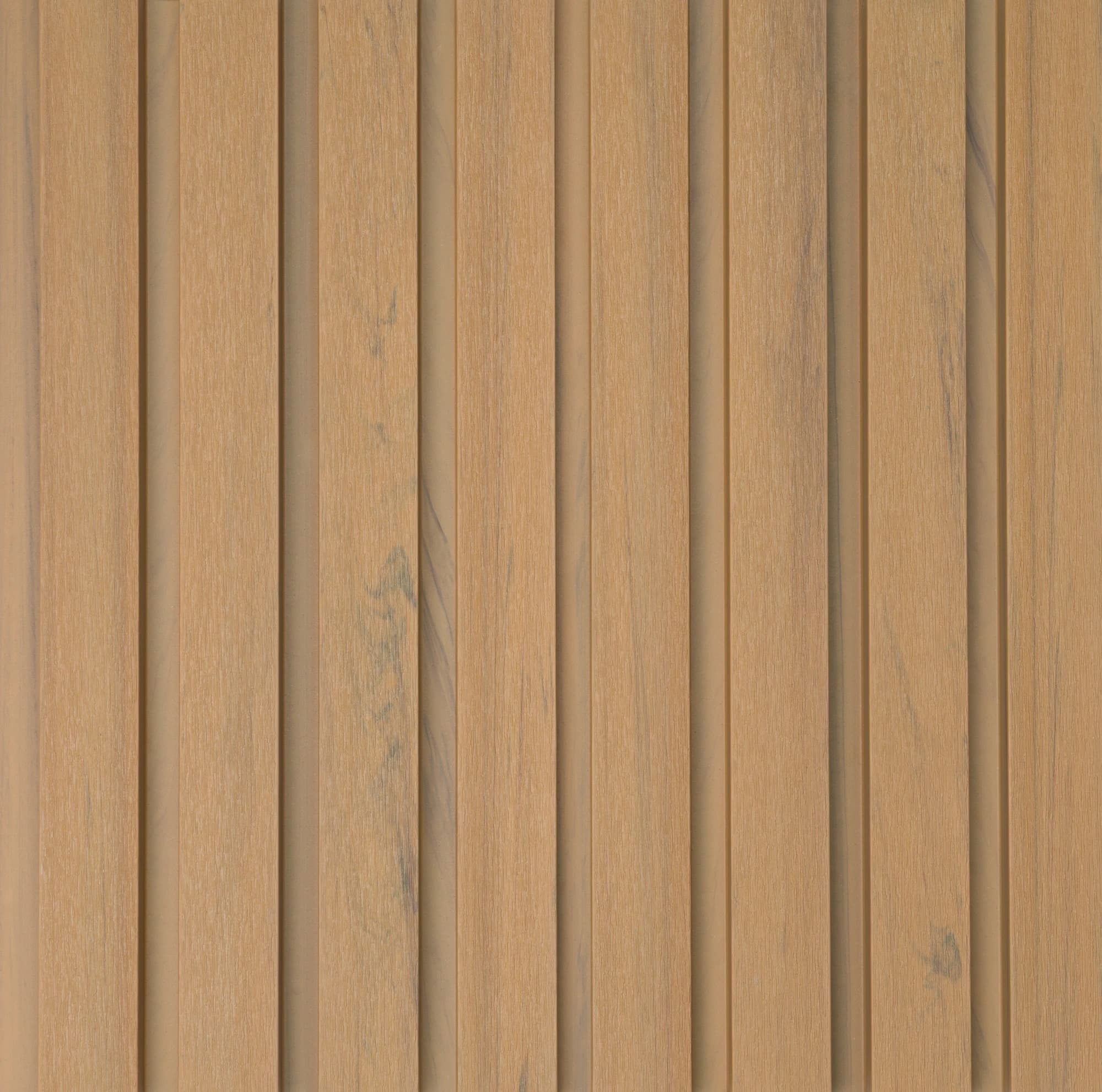
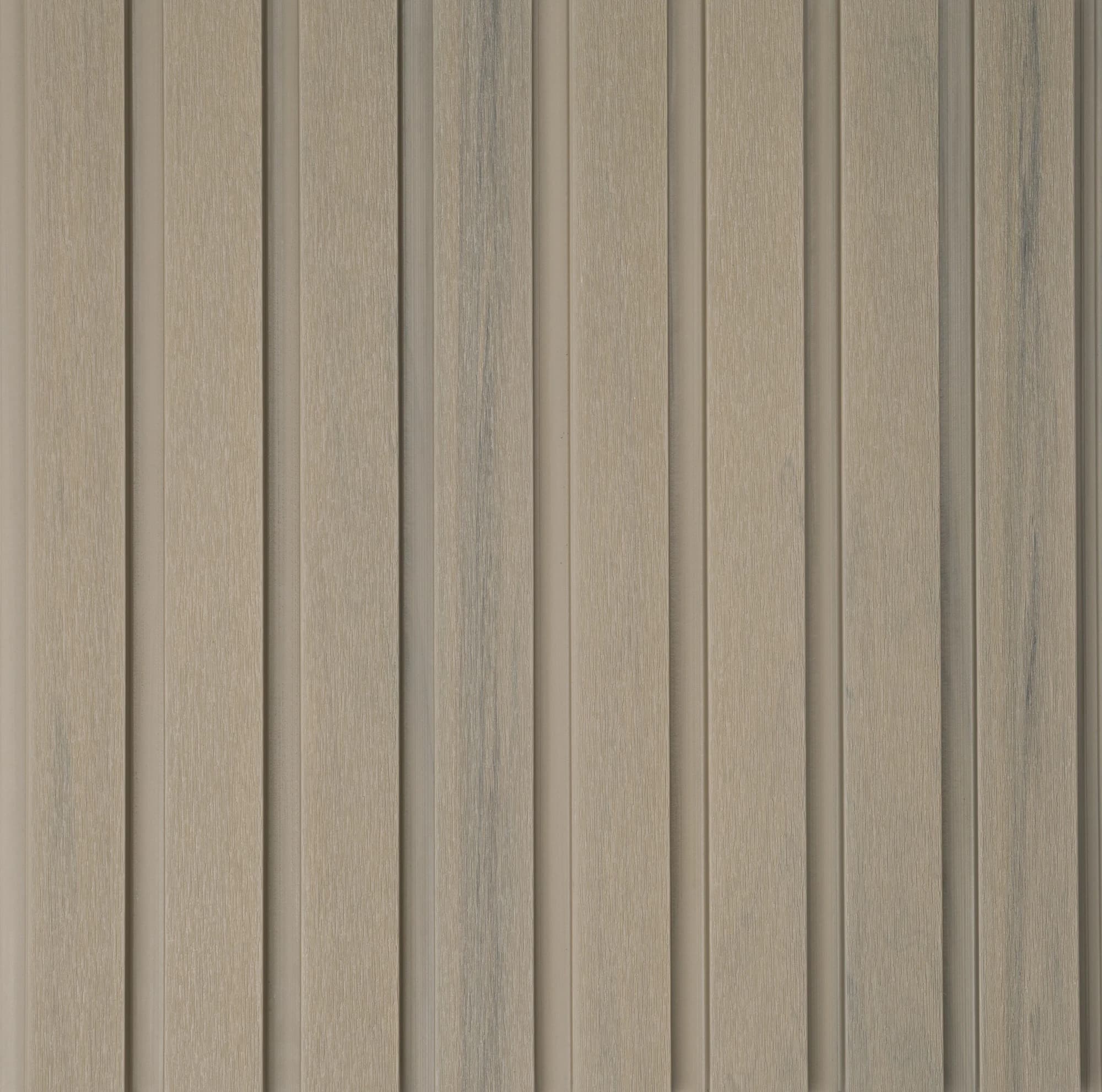
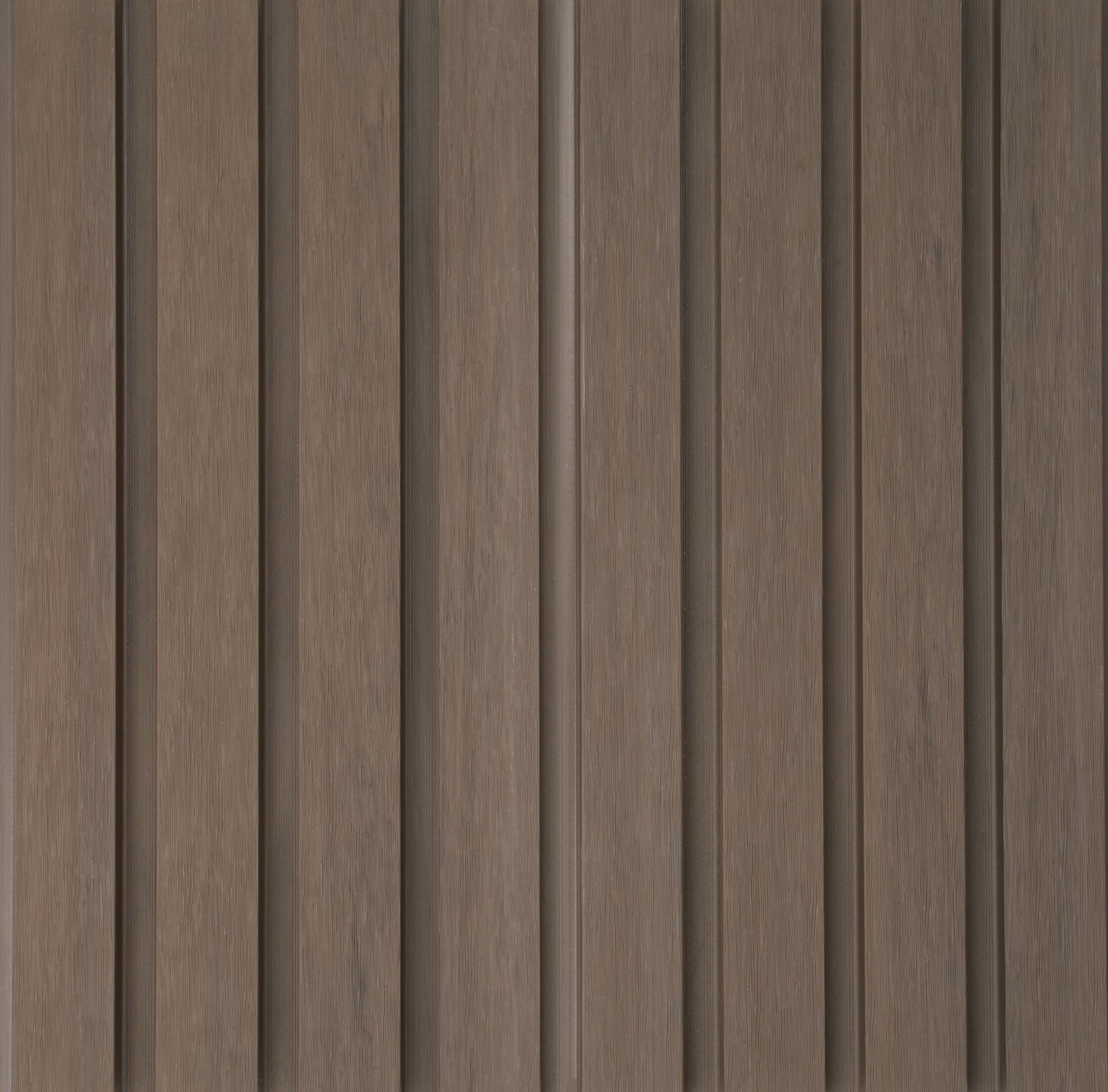
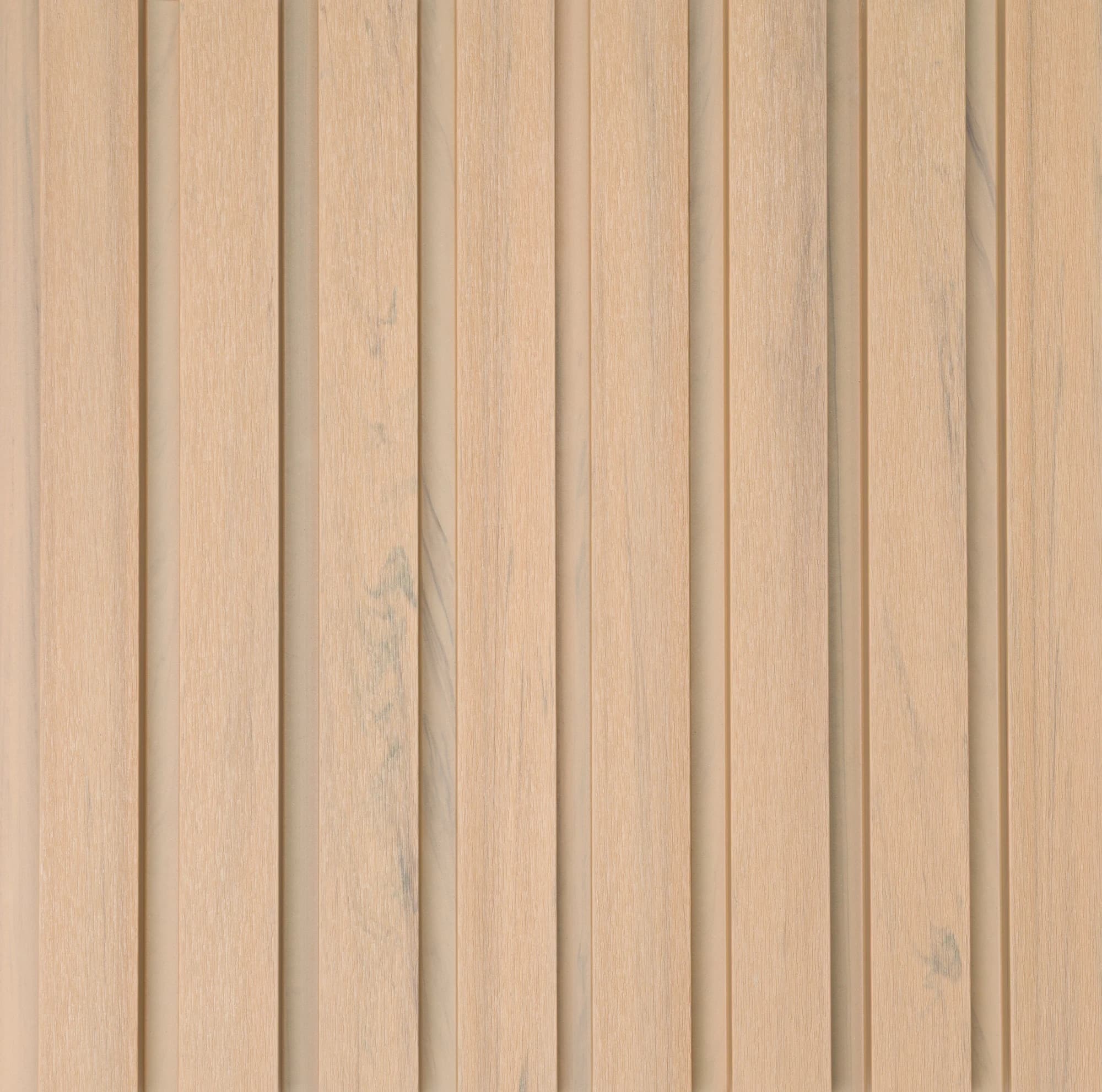
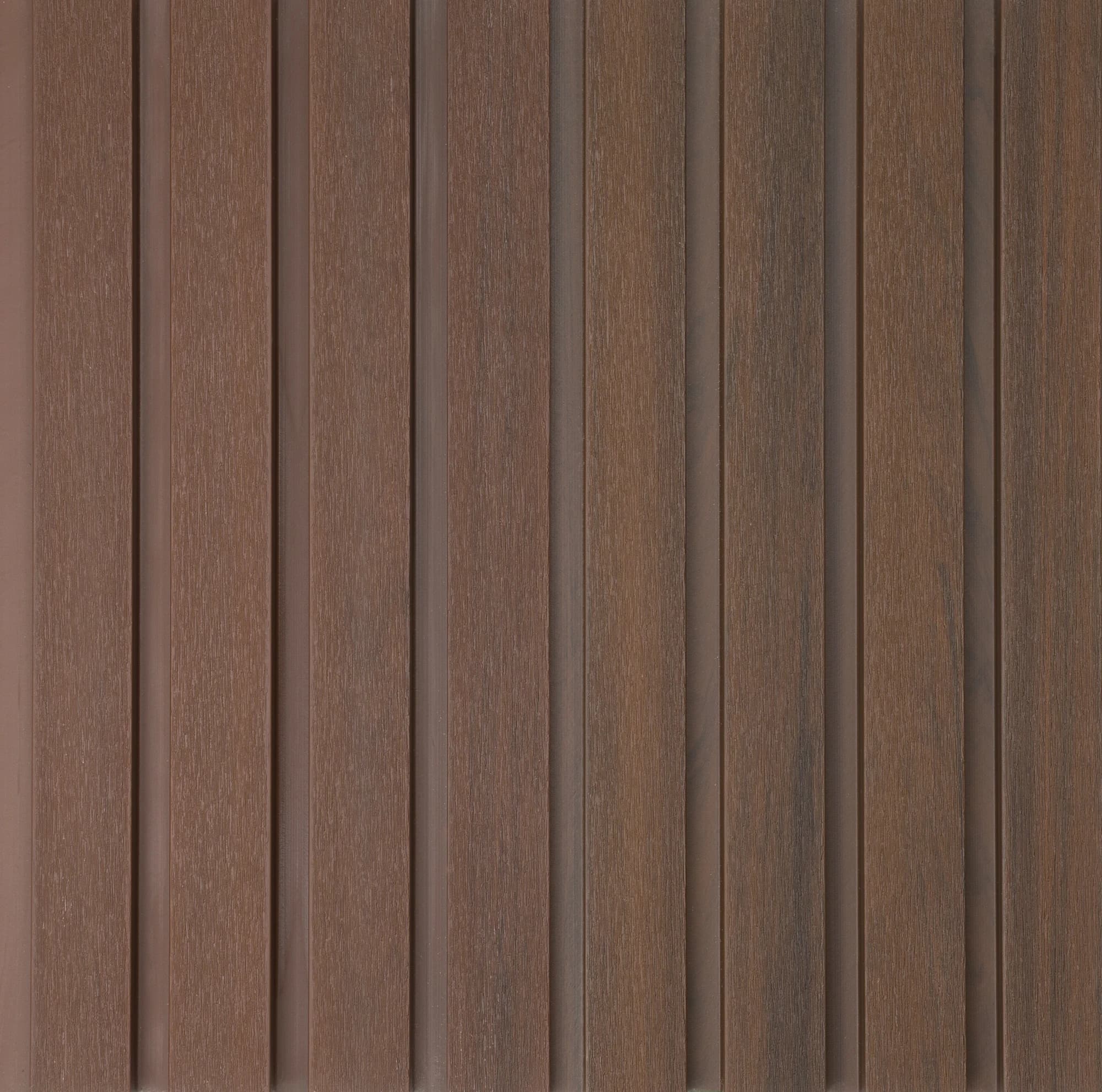
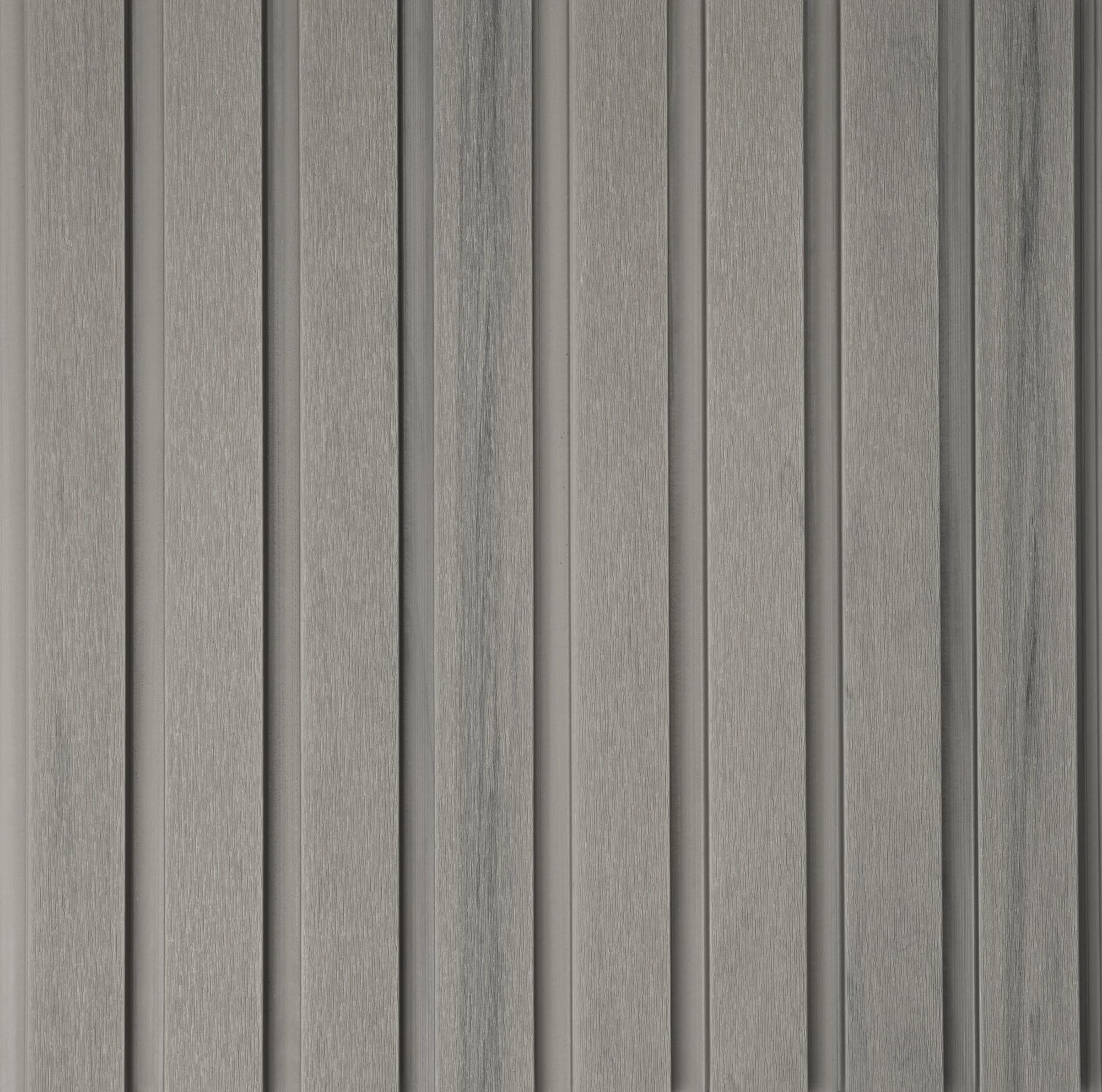
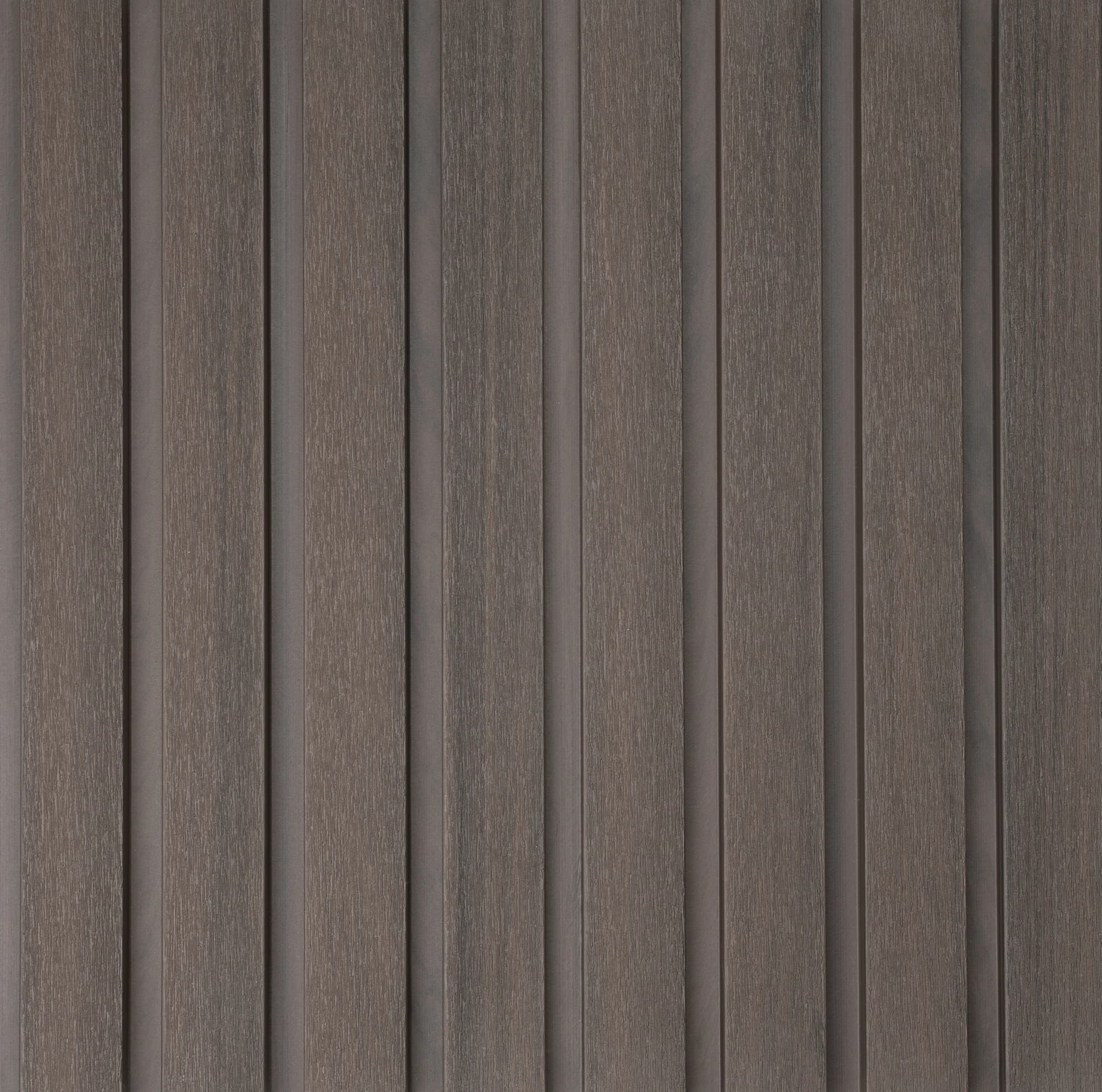
Installed WPC grooved panel, cycling through five of its colors: Teka, Incienso, Antique, Ash Gray and Obsidiana
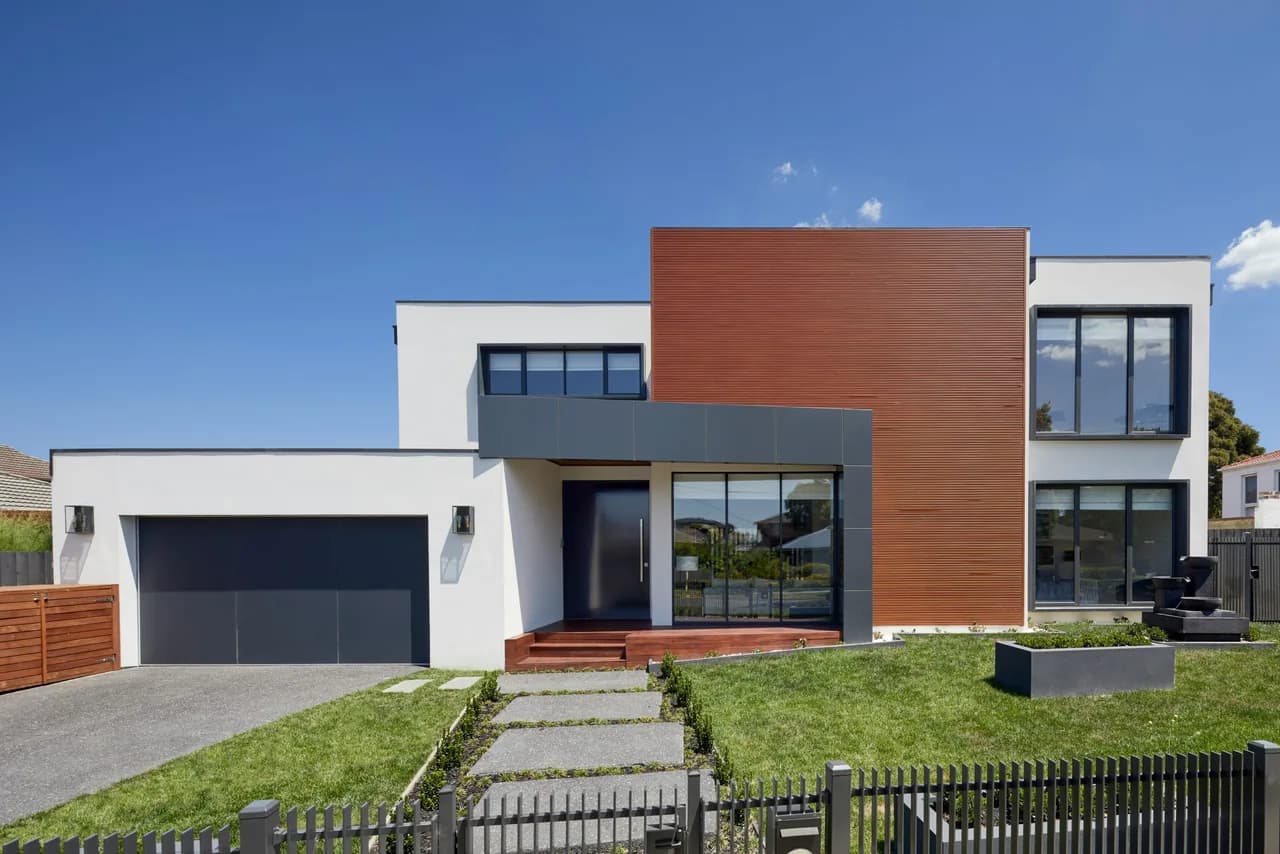
White two-story house with a reddish WPC grooved panel section over the entrance
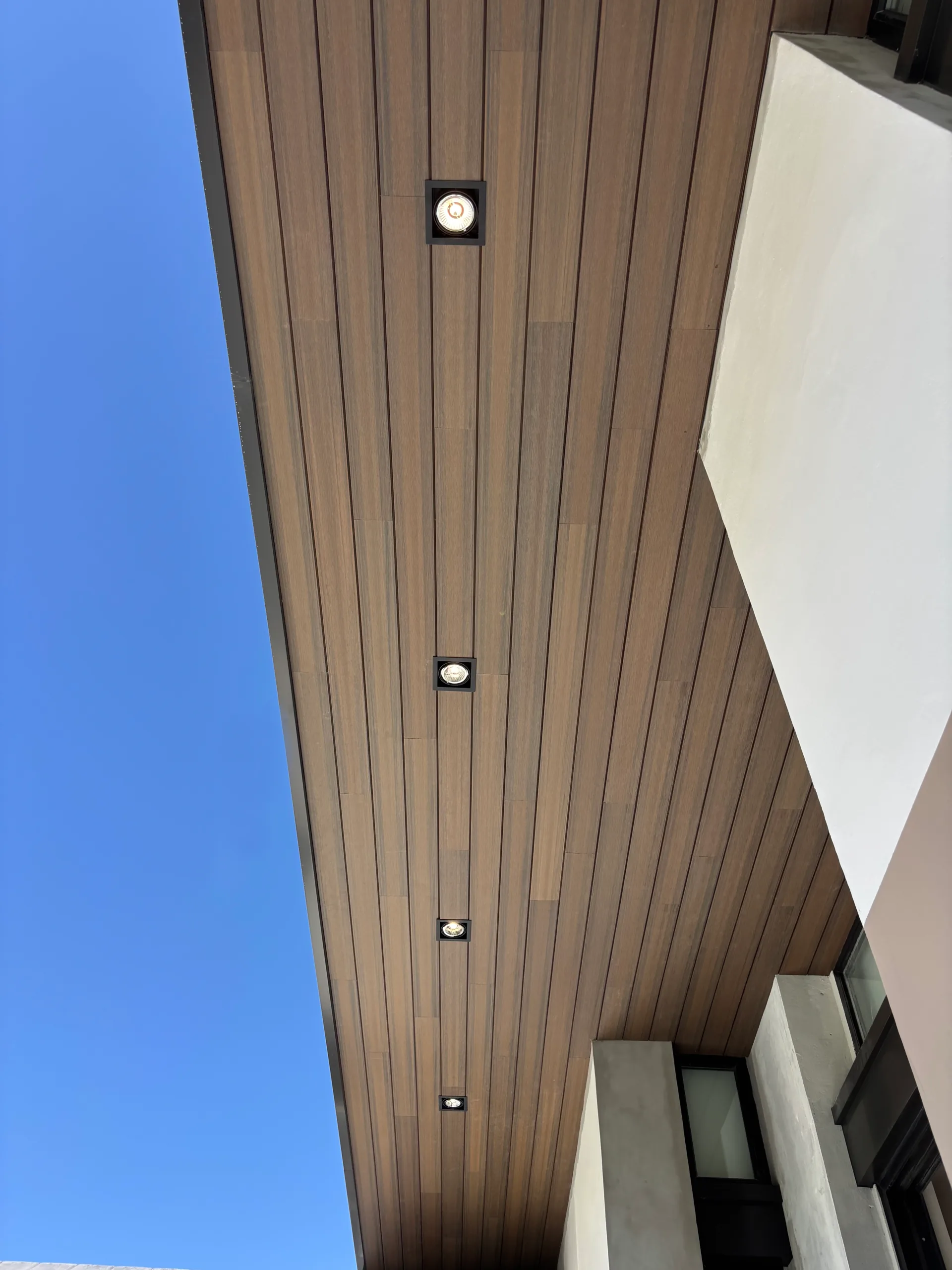
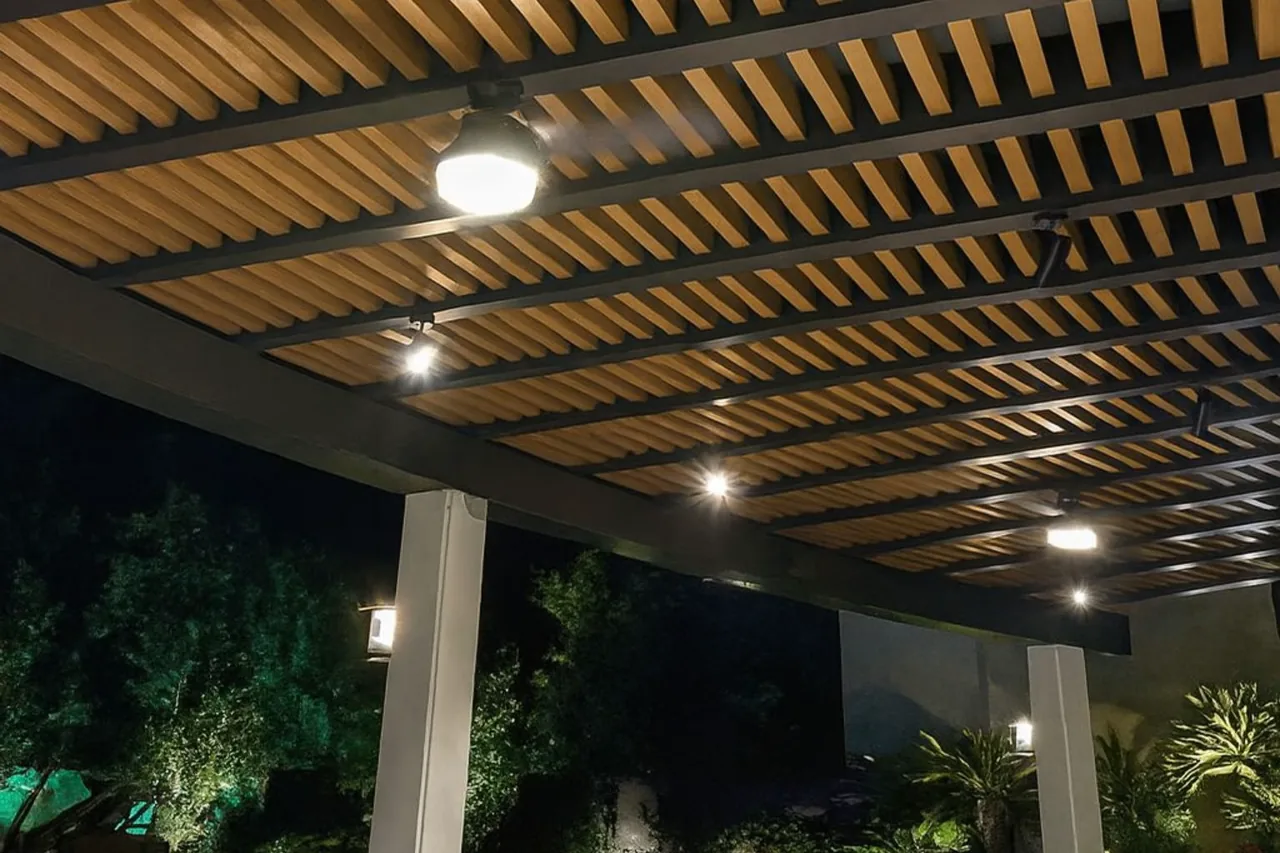
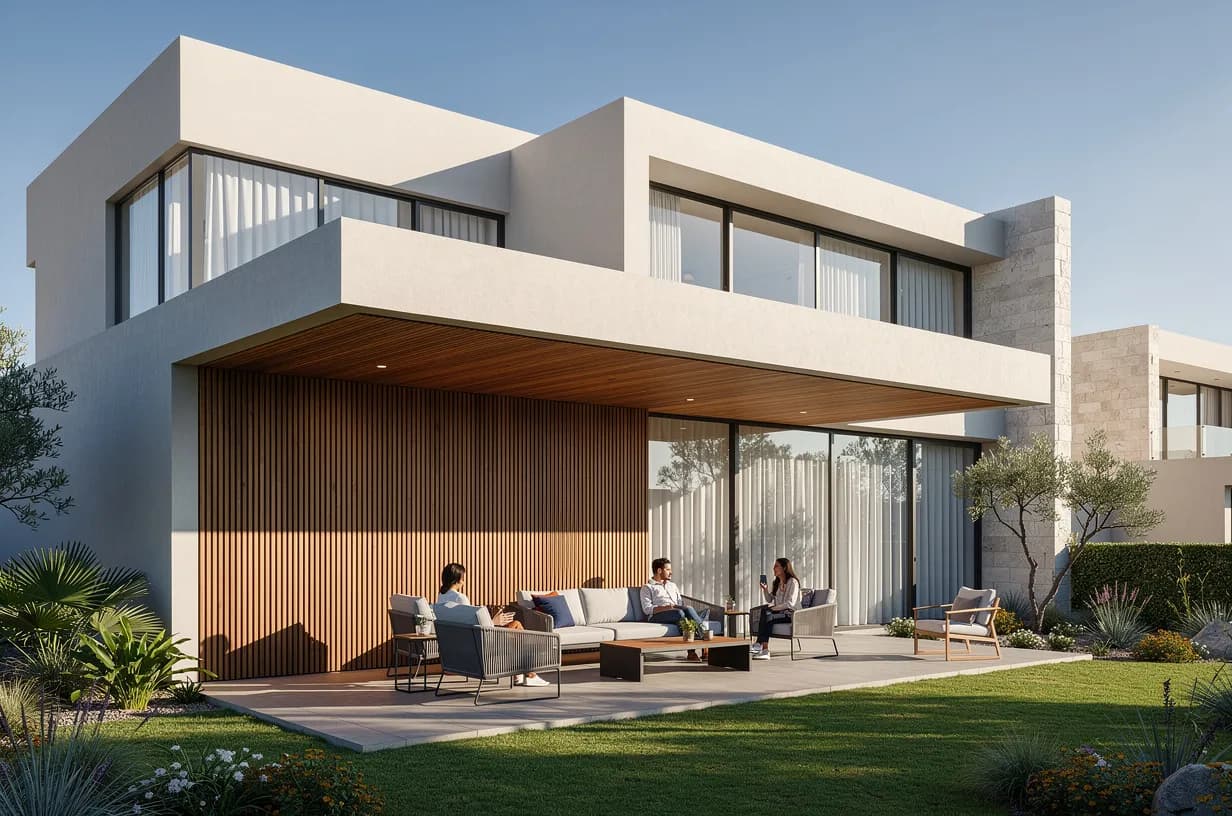
A home's covered patio with WPC grooved panels on the wall and the ceiling

The Grooved Panel is exterior cladding that looks good and works hard. Use it on facades, walls, entrances and gatehouses, around patios, gardens and balconies, and on patio ceilings and soffits. It's built for the outdoors, with a co-extruded cap on all four sides, so it won't rot, splinter or warp. Its grooves add shadow lines between the boards, and it installs vertically or horizontally.

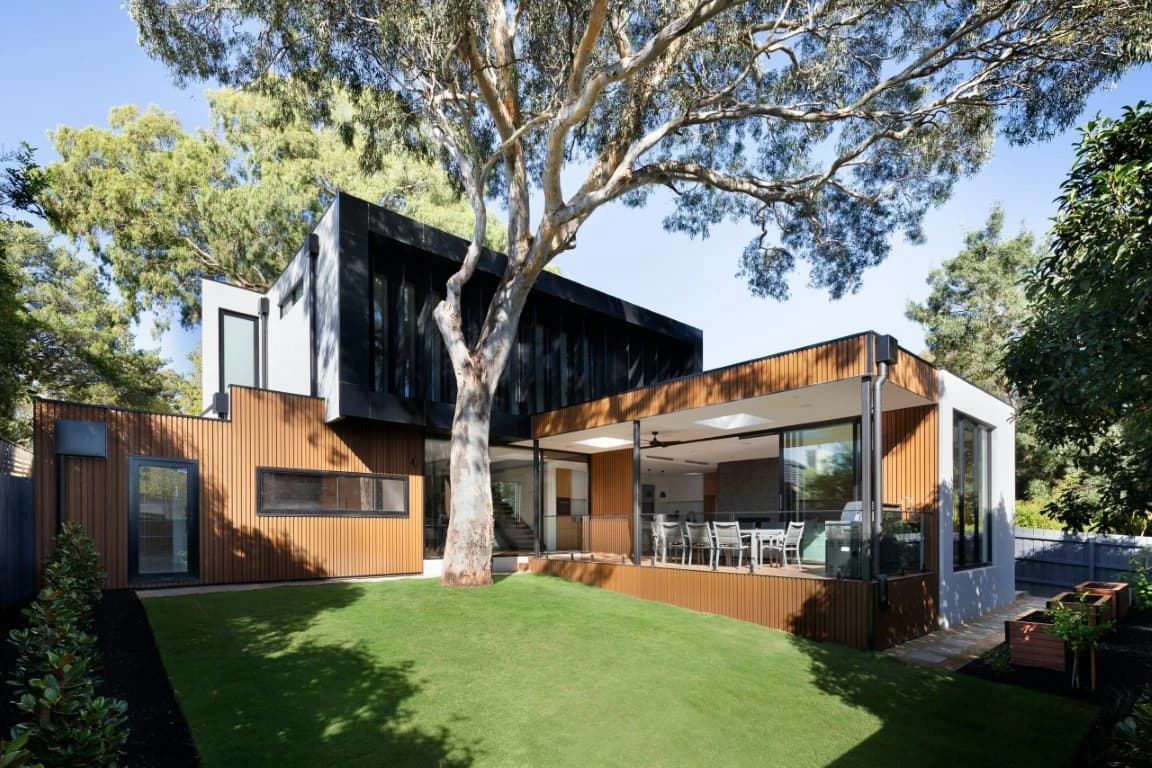
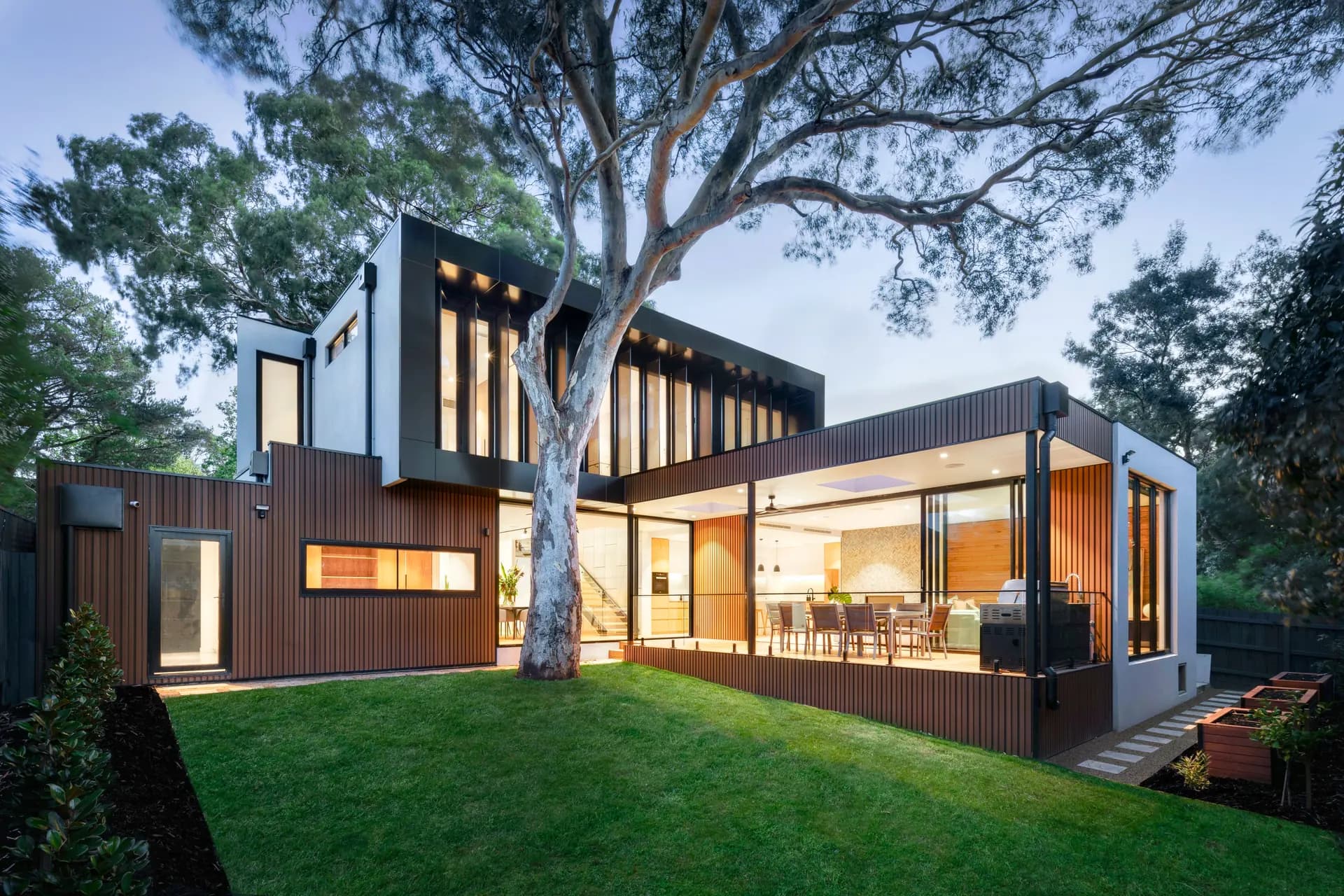
House with wood-tone WPC grooved panel walls and an open patio, seen past a eucalyptus tree on a grassy lawn
Outdoor kitchen with stainless steel grills in front of a WPC grooved panel wall installed vertically
Vertical install
Modern house with part of the facade clad in reddish WPC grooved panels installed horizontally, seen from the yard
Horizontal install
02

The look of wood siding in WPC, with grooves that shape the facade

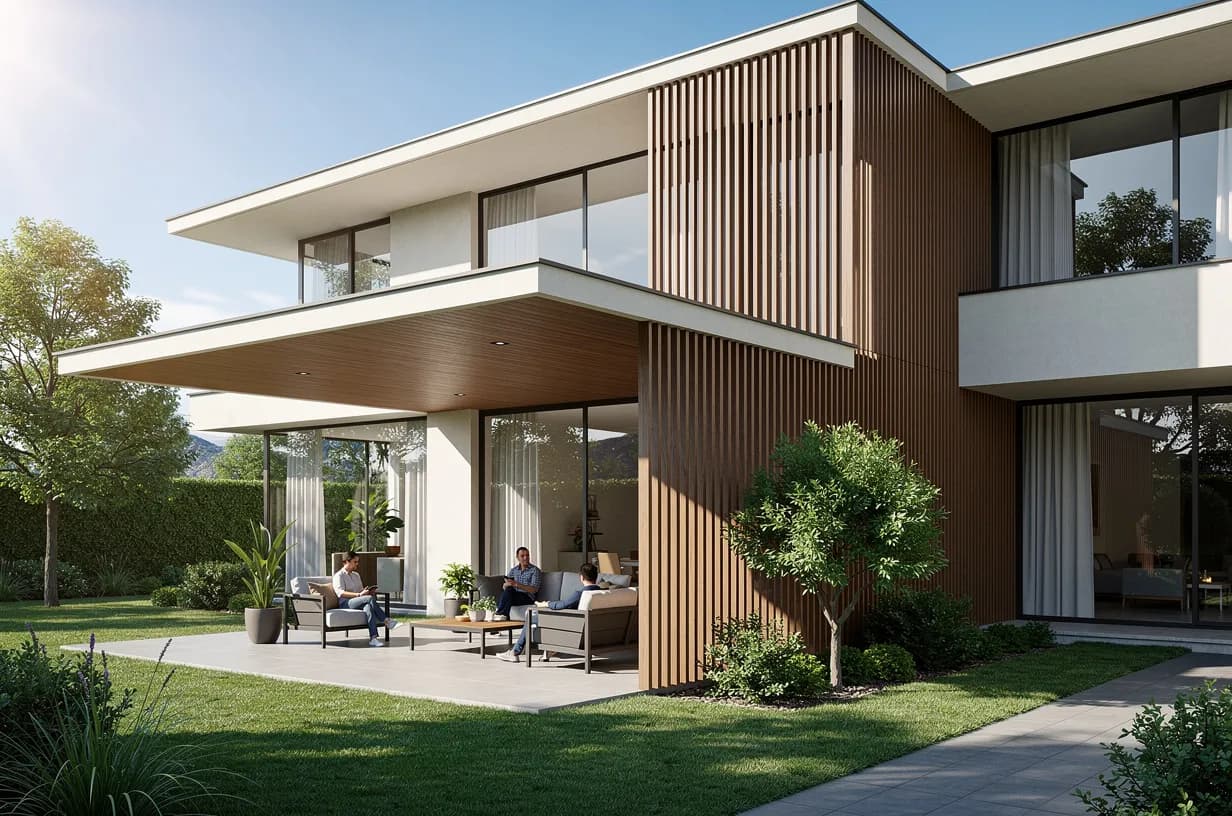
Covered patio of a modern house with a wood-tone WPC grooved panel wall and ceiling, outdoor seating and a garden in front

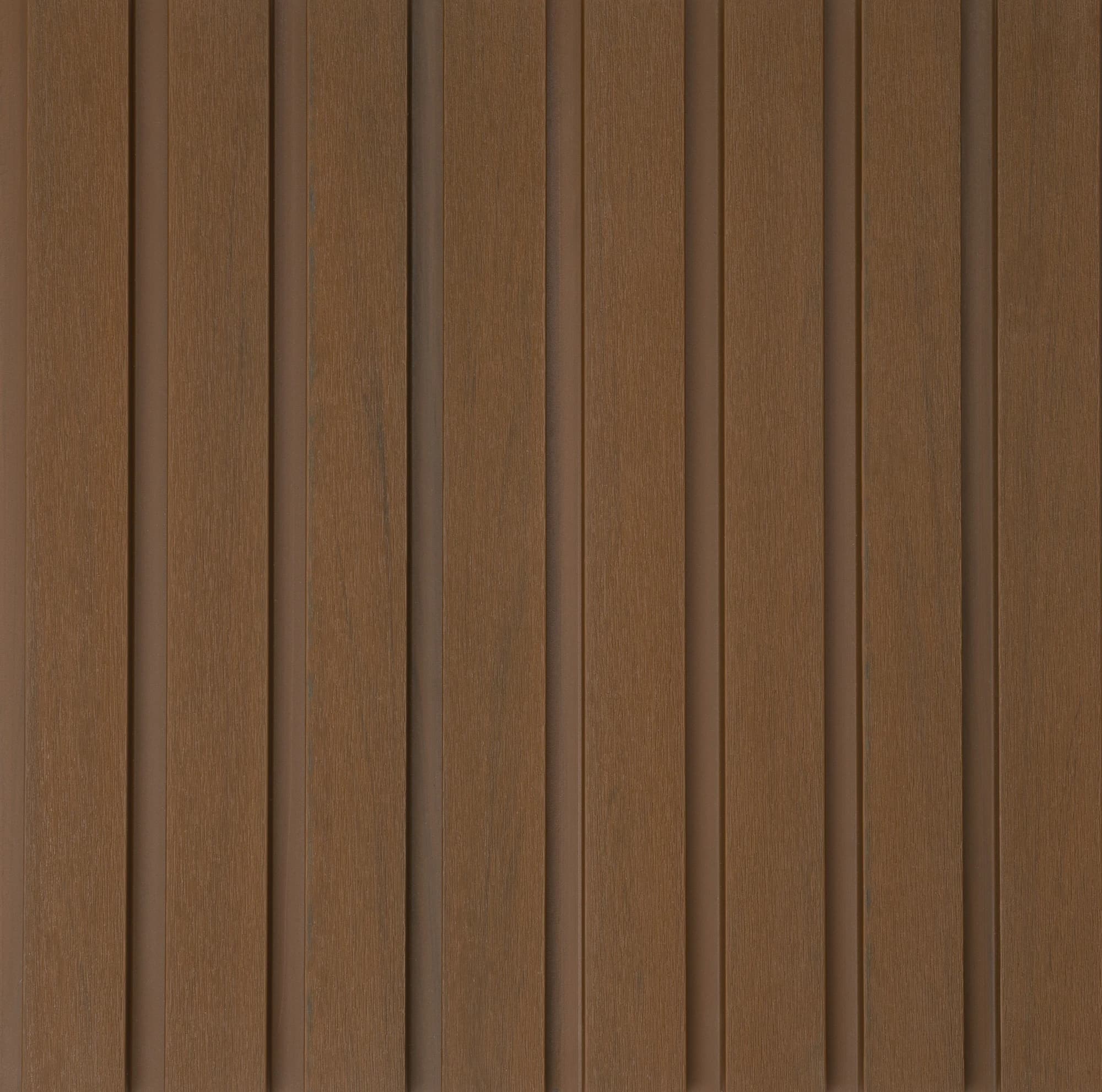
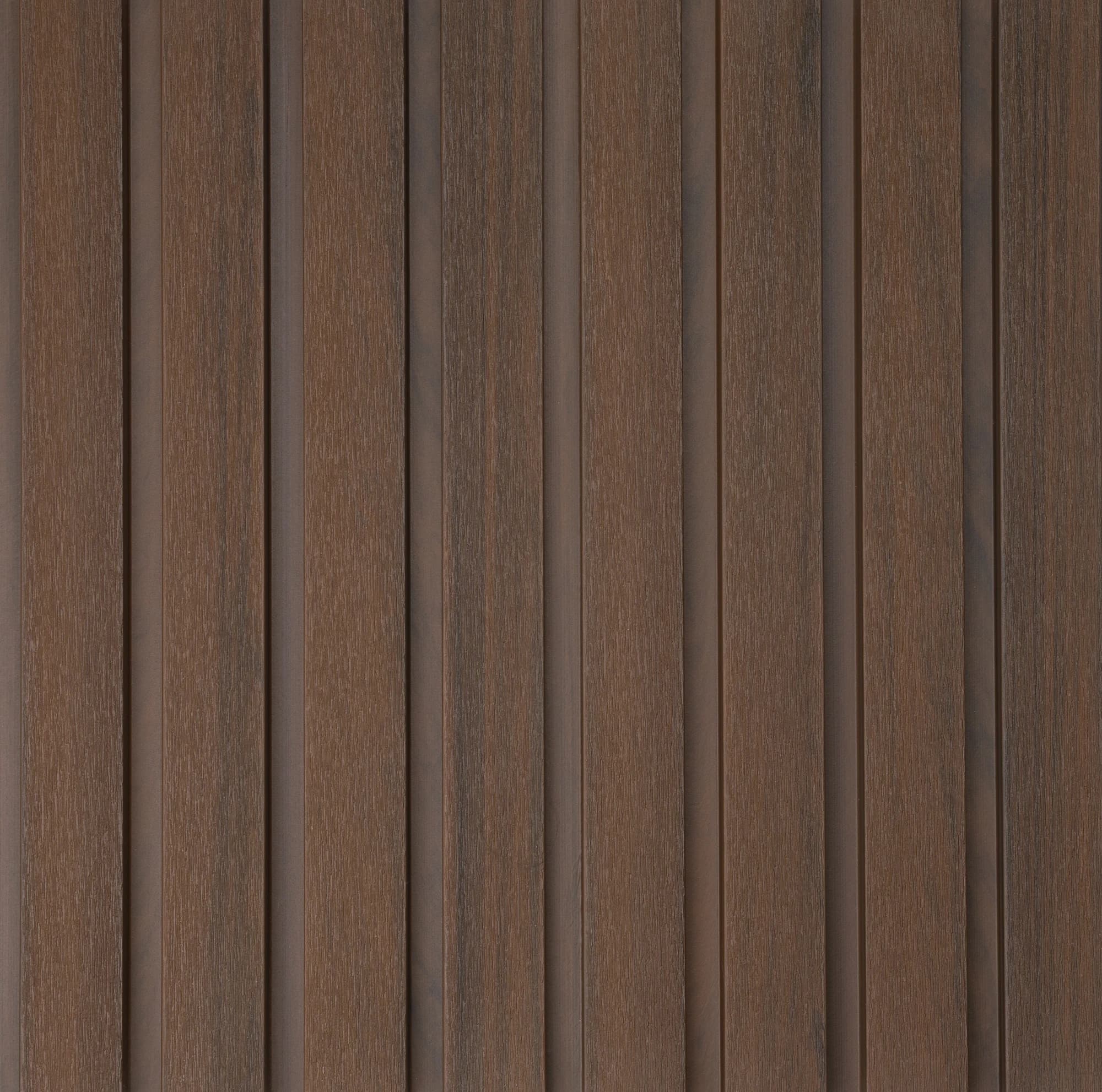
The Grooved Panel has a grooved, wood-grain face that mimics natural wood siding. Unlike smooth Wall Cladding, it adds shadow and relief across the wall, and the effect gets stronger on large facades.

Each board is 9.8 ft (300 cm) long and shows 7.9 in (20 cm) once installed. Long, wide boards cover big walls with fewer pieces and fewer seams, so installs go faster.

Vertical or horizontal: one board, two looks

The boards run whichever way the design calls for, and the look changes with them. Run horizontally, the lines make the wall look wider. It's the classic facade layout and the most common one on homes and hotels. Run vertically, the facade looks taller and more contemporary, and you'll see it most on storefronts and entrances.

Fastening is the same either way. A hidden clip holds each board at the overlap, so not a single screw shows on the finished surface.
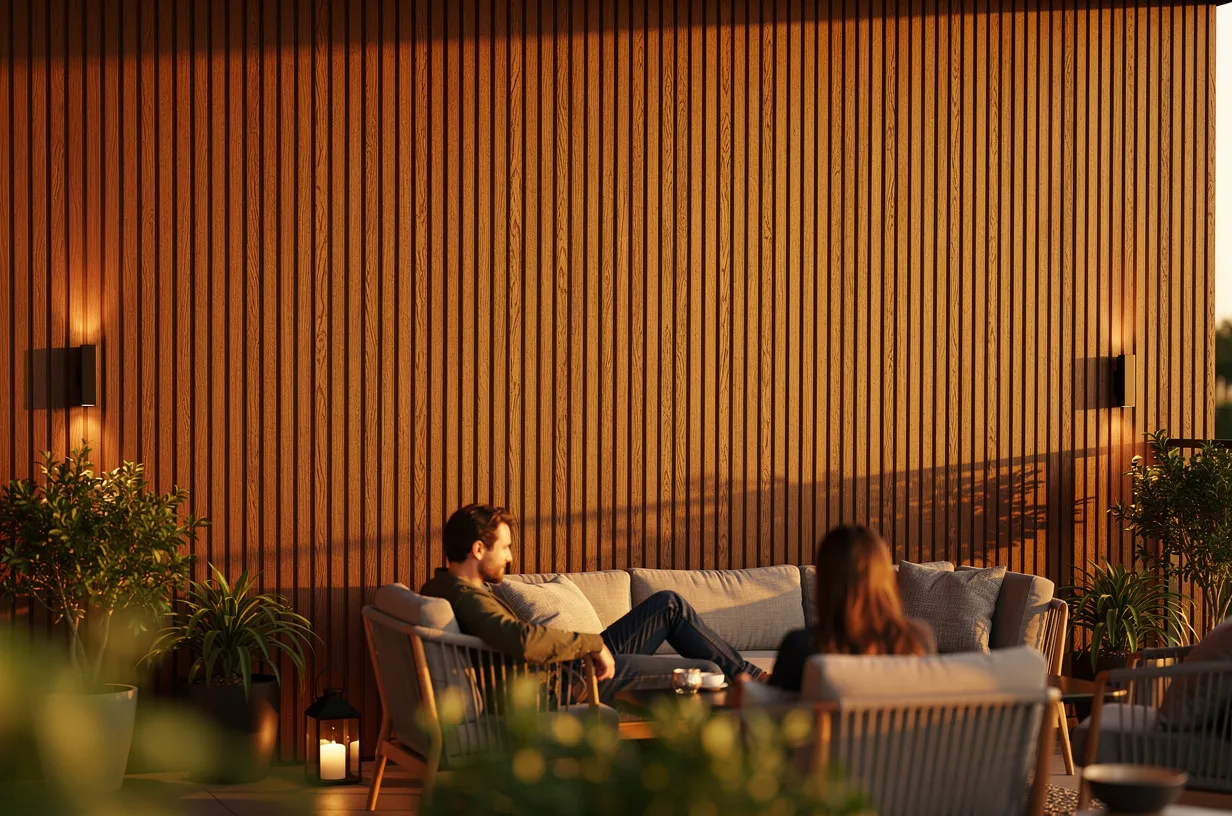
Outdoor lounge at dusk in front of a tall vertical wood-tone WPC grooved panel wall, with planters and wall lights
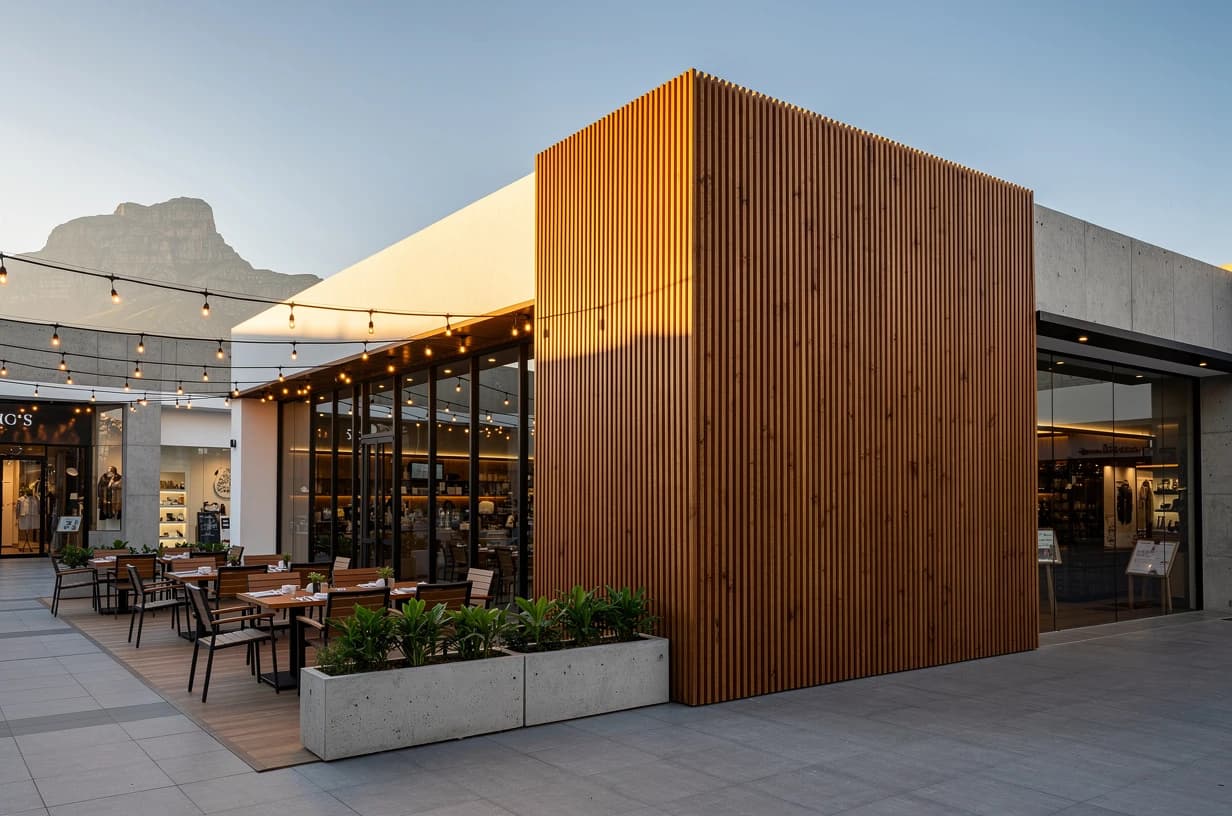
Restaurant in a shopping plaza at sunset, with a WPC grooved panel section between exposed concrete walls, concrete planters and a deck terrace below

Every measurement on this page comes from the panel's data sheet, signed off by our in-house quality lab.

Built for the weather, no repainting

A facade takes sun, rain and temperature swings all year, and that's where the Max Shield cap comes in. It's a 0.02 in (0.5 mm) layer co-extruded with the board, not painted or glued on later. It protects the color from the sun and keeps out moisture and stains. The cap is made with raw material imported from the United States, and we control color from batch to batch, so the boards you reorder match the ones already on the wall.

The payoff is less upkeep. A facade you install today won't need repainting, staining or sealing down the road. Mild soap and water are all the maintenance it needs. We make it ourselves at our plant in Santa Catarina, in the Monterrey metro area of Mexico, and deliver it by truck anywhere in Texas.

Grooved Panel or Wall Cladding: when to use each

Both cover the same surfaces — walls, facades, soffits and patio ceilings — so the choice comes down to the look you want, not where they go. If you want the surface to stand out, use the Grooved Panel. Its grooves add relief, and the shadows shift with the sun. If you'd rather it blend in, use Wall Cladding, which gives a smooth, even surface with no visible lines.

They share the same 12-color palette and the same hidden clip, so you can use both on one job without the switch standing out. Try Grooved Panel on the wall and smooth Wall Cladding on the ceiling above it.
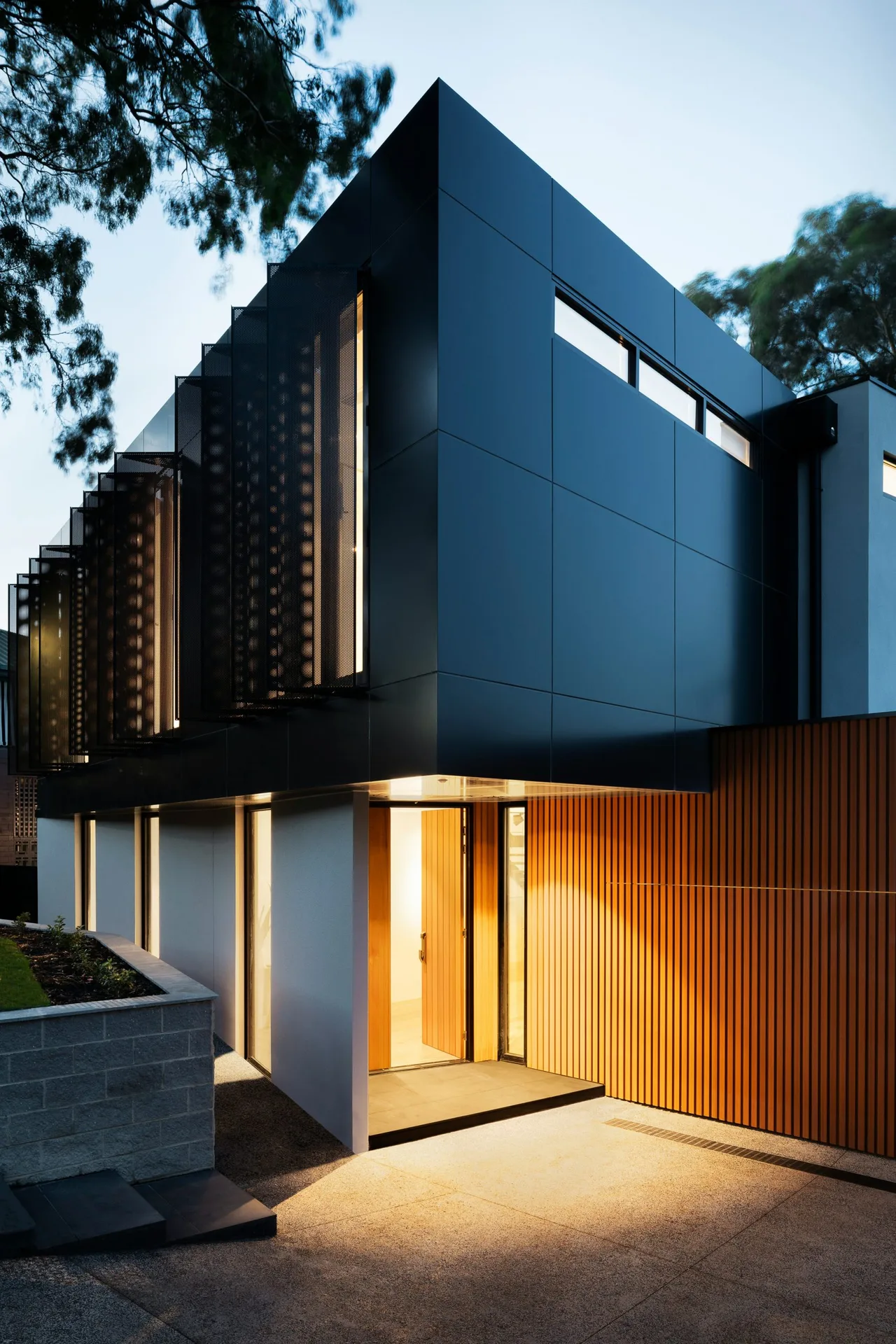
Modern facade at dusk with a lit wood-tone WPC grooved panel wall next to the entrance
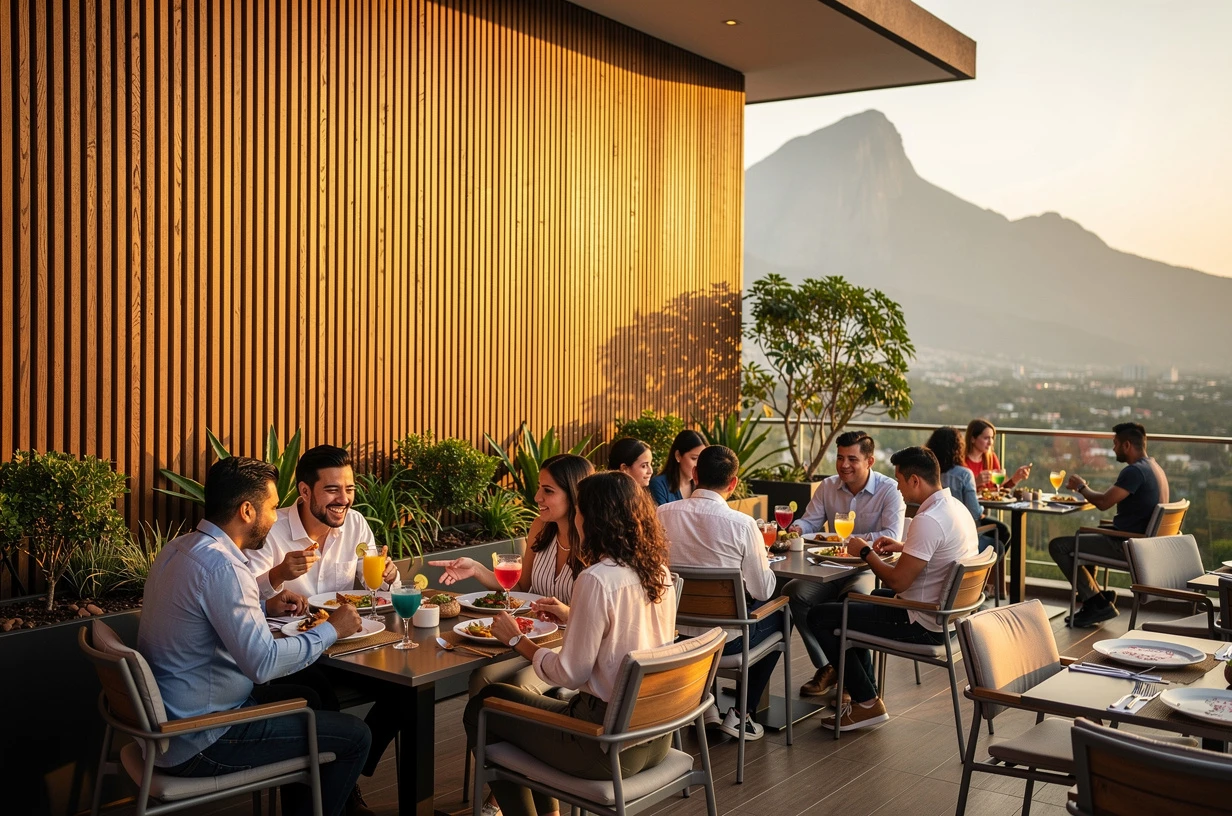
Diners on a restaurant terrace at sunset, under a golden WPC grooved panel wall
Facade corner with horizontal reddish WPC grooved panel next to gray panels, under a blue sky

No staining

Cleans with soap and water. No sanding, no sealing, no painting.

Get a quote →
Outdoor kitchen with grills in front of a WPC grooved panel wall, with two stone planters on the counter
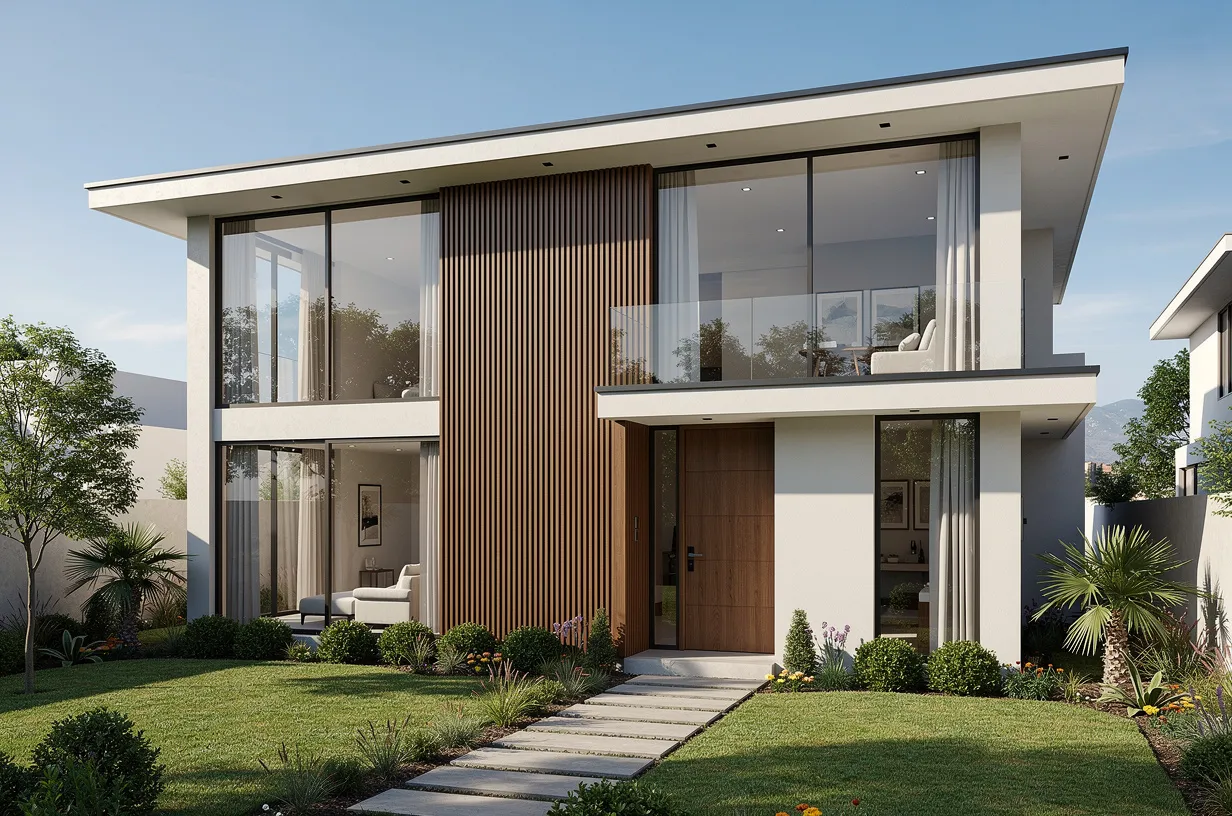
Modern house with a wood-tone WPC grooved panel section between the large windows

Same color

Controlled batch to batch across the co-extruded line

See the data sheet →
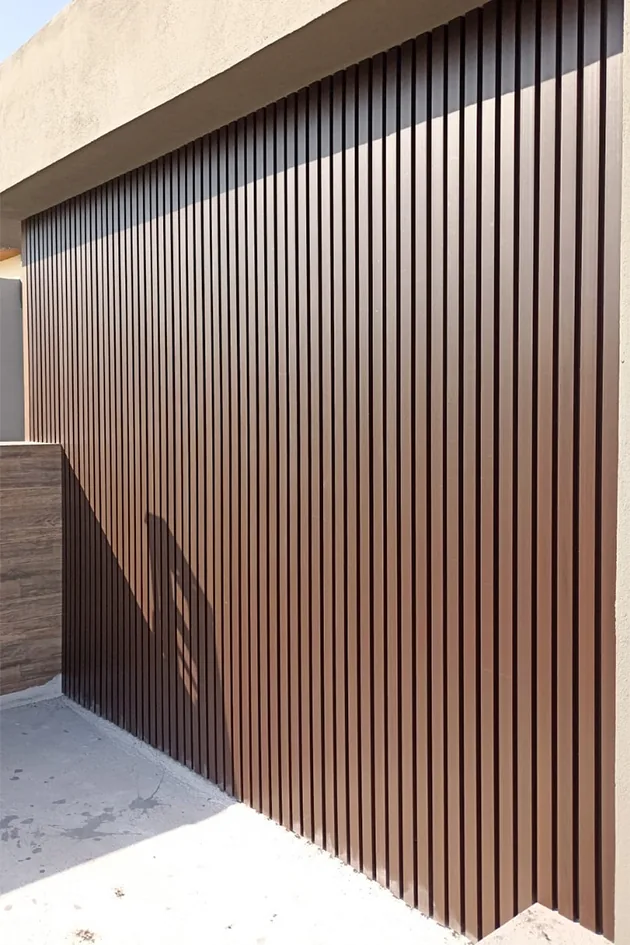
Vertical wood-tone WPC grooved panel wall with afternoon shadows
Facade with a section clad in reddish WPC grooved panels, seen from the yard
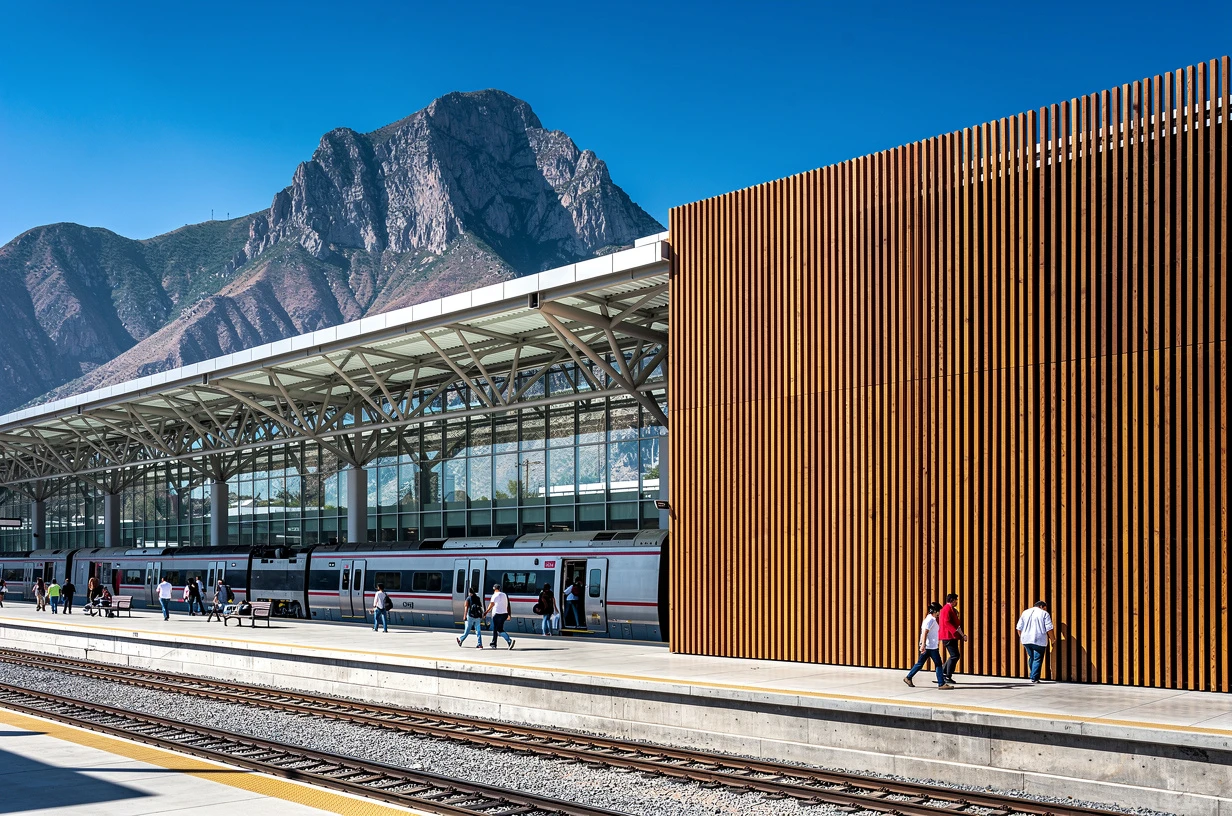
Train station with a Teka WPC grooved panel section and a mountain behind it

An outdoor wall that won't rot, splinter or warp, and never needs stain.

Facade corner with vertical sand-tone WPC grooved panels next to a gray section, with pine trees behind
Outdoor kitchen with stainless steel grills in front of a vertical wood-tone WPC grooved panel wall

Wood grain. No sanding, no staining.

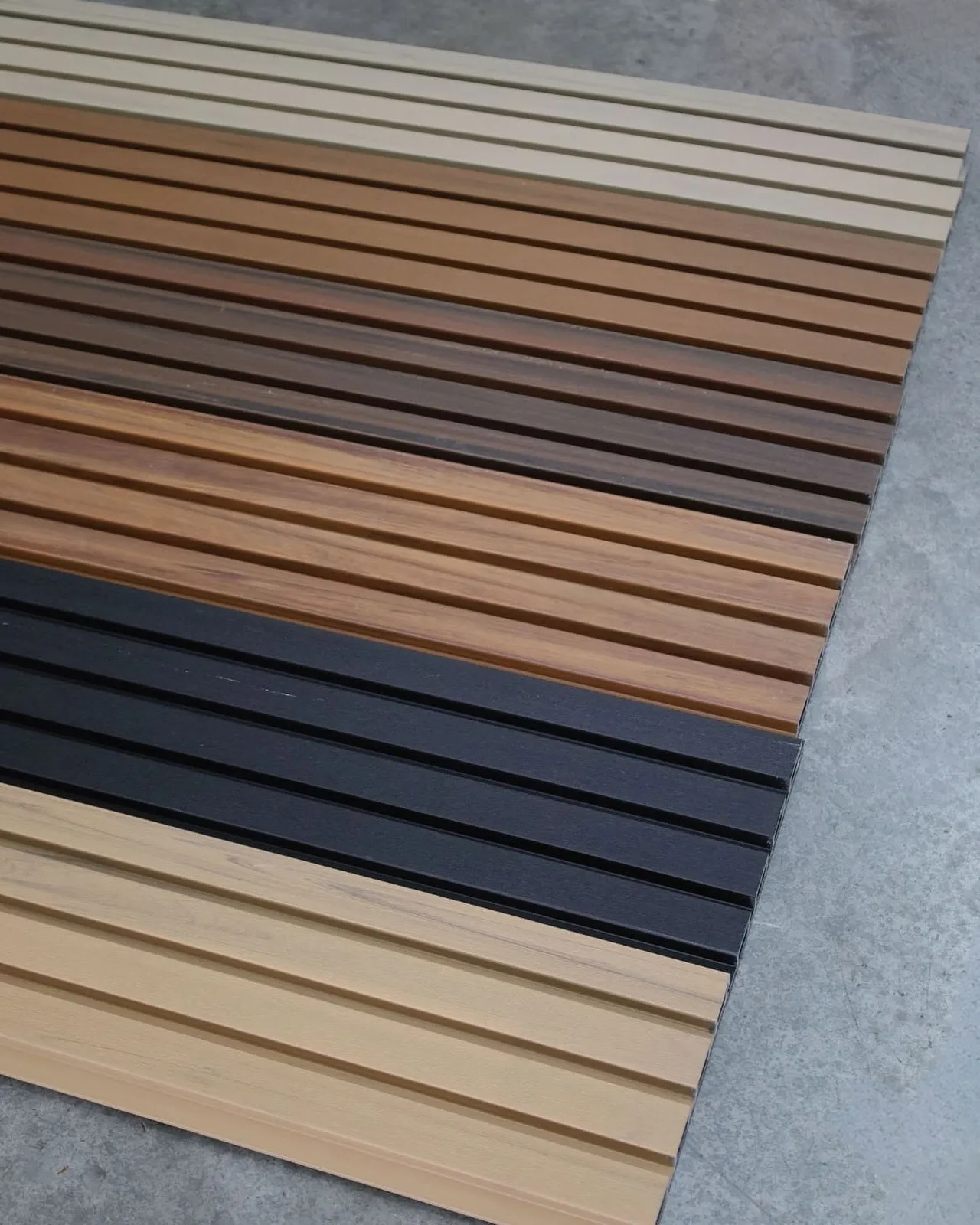
WPC grooved panel boards in several colors, laid side by side on a concrete floor
Single-story house with a wood-tone WPC grooved panel facade and an open patio, seen from the yard past a eucalyptus tree

Made for walls and ceilings

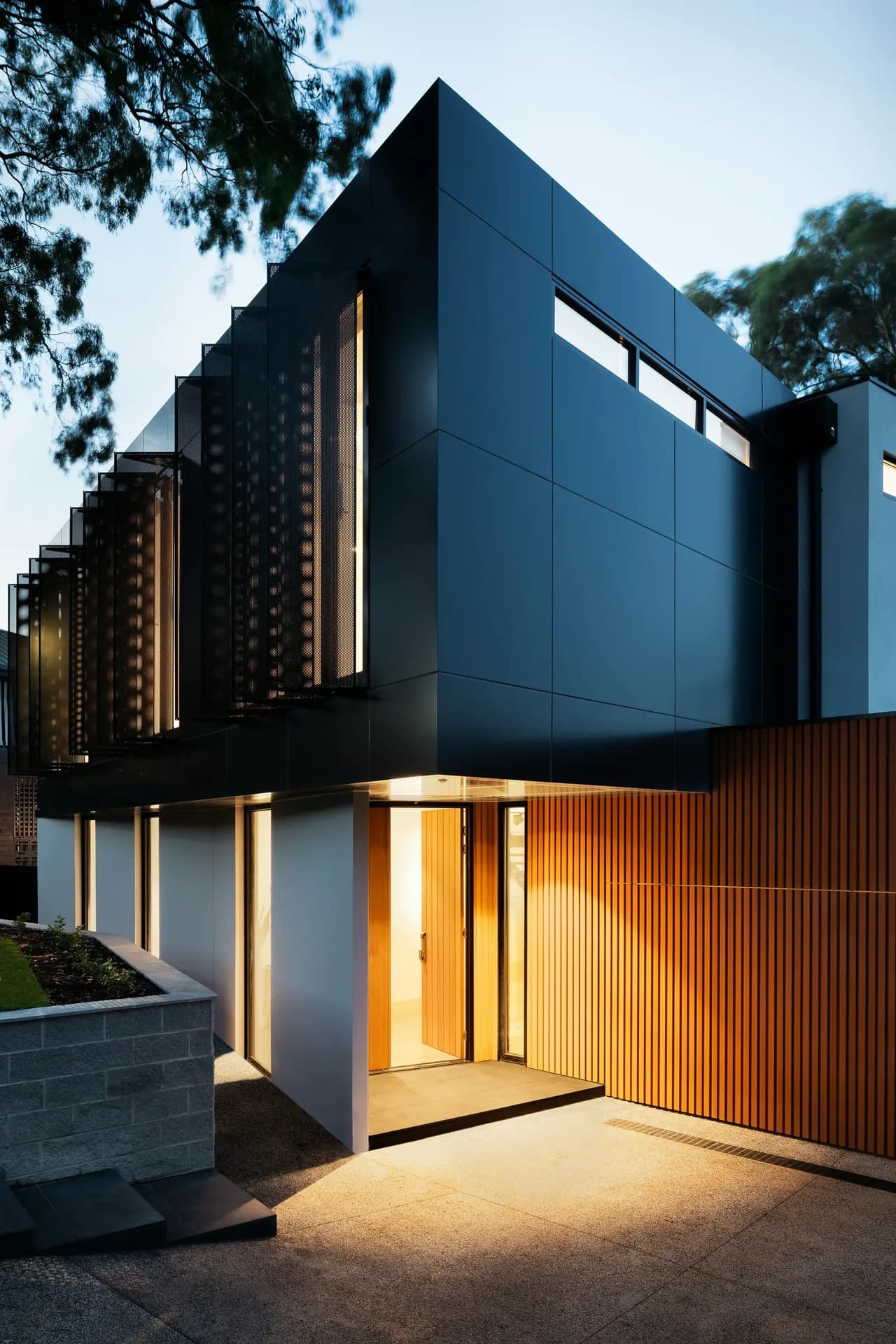
House entrance lit up at dusk, with vertical wood-tone WPC grooved panels under a dark upper section
07

12 Grooved Panel colors

6 stock colors and 6 made to order. Pick one to see it installed.

Grooved Panel installed in IPE

01 / 12 · Stock color

IPE

Request a sample of this color →

Stock 06

Made to order 06

200-piece minimum

Need a different color?We make custom colors to match your Pantone code, with a 700-piece minimum (where feasible).Ask us →

Frequently asked questions about our exterior Grooved Panel(Cladding for walls and facades)

Don't see your question about the Grooved Panel? Send us a message and we'll get back to you shortly.

What is the Grooved Panel?
It's board-style cladding that goes over exterior walls and facades to protect them and change their look. Our Grooved Panel has a grooved face that looks like wood siding, with lines that add rhythm and shadow. It's made of WPC, a composite of wood fiber and polymer, so it won't rot and never needs stain. We make it in Santa Catarina, in the Monterrey metro area of Mexico.
What does “grooved” mean?
The exposed face has channels that run the length of the board. The grooves create parallel lines and cast small shadows in daylight, so the wall has more texture and depth than it would with a flat board. You get the look of wood siding in a material that stands up to sun and rain and never needs stain.
What does “co-extruded” mean?
The board and its protective cap are made at the same time, as one piece. As the WPC core is extruded, the Max Shield cap bonds to it, and on the Grooved Panel it covers all four sides. It isn’t paint or a coating applied later, so it won’t peel or flake. It protects the board from sun, rain, moisture and stains.
Can it be installed vertically or horizontally?
Yes, the same board works both ways. Run vertically, the grooves make the wall look taller. Run horizontally, they make it look wider and calmer. The only thing that changes is the framing layout, which always runs across the boards. You can even mix both directions on one facade to set apart different parts of the building.
Can it go on ceilings too?
Yes. It's mainly used on walls and facades, but the Grooved Panel also works on exterior ceilings, such as patio ceilings, soffits and porches. On a ceiling, the grooves create defined lines, unlike the smooth face of Wall Cladding. Each 9.8 ft (300 cm) board weighs about 16.1 lb (7.3 kg), so factor that in when you check the ceiling framing.
How is it different from Wall Cladding?
Both cover exterior walls and ceilings. The difference is texture and size. The Grooved Panel has grooves that create lines and shadow, while Wall Cladding is smooth and gives a flat, even surface. A Grooved Panel board is 9.8 ft (300 cm) long with 7.9 in (20 cm) exposed. Wall Cladding is 8 ft (244 cm) long with 5.9 in (15 cm) exposed. Both come in the same 12 colors.
Do you sell it for indoor use?
No. We sell and recommend the Grooved Panel for outdoor use only, on facades, garden walls, patios, entry gatehouses and street-facing storefronts. Its Max Shield cap is built for the weather, so indoors you'd be paying for protection you don't need. Covered patios, porches and open-sided shade structures count as outdoor use.
How much maintenance does it need?
Very little. No sanding, staining, sealing or painting. To clean it, use water, mild soap and a soft-bristle brush, working along the grooves, where most of the dust collects. Avoid harsh chemicals, solvents and abrasive pads, which can damage the surface. If you have a stain that won’t come off, contact us and we’ll tell you how to treat it.
How many boards do I need per 100 sq ft?
About 15.4 boards per 100 sq ft (1.66 per m²). Each board is 9.8 ft (300 cm) long and shows 7.9 in (20 cm) once installed, since part of its width overlaps the next board. Cuts, windows, corners and the board direction you choose also affect the quote. Send us your wall or facade measurements and we’ll help you figure out how many boards you need.

More WPC products